Woven Herringbone Tape
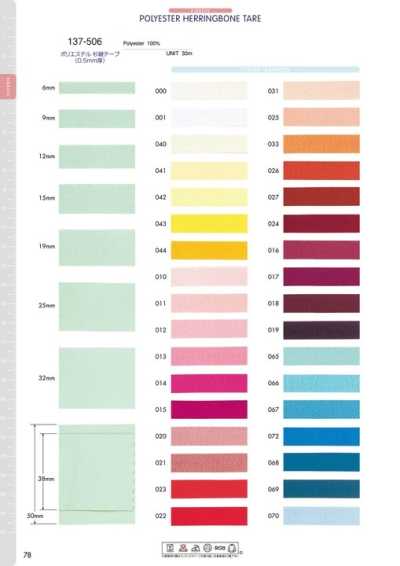
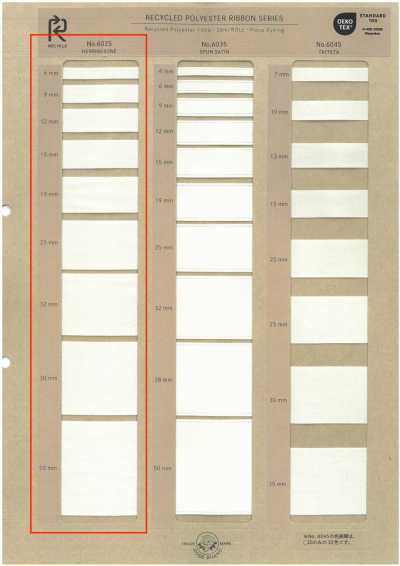
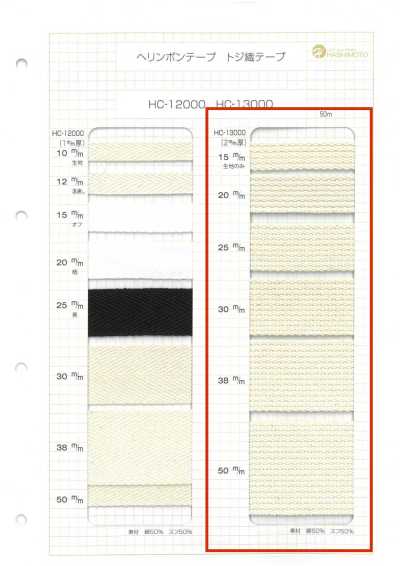
Woven herringbone tape is a flat tape with a woven pattern resembling cedar leaves and continuous V-shapes on the surface, used as an apparel trim for reinforcement, finishing facings, and decoration.
Contents6 sections
Definition and Overview
Woven herringbone tape is a flat tape with a herringbone pattern made up of alternating V-shaped motifs. Also called herringbone tape, it is used for reinforcement and decoration in apparel and bags, making use of its textured look and the moderate thickness typical of woven materials.
This is the name of the tape itself and does not refer to a specific fiber material. Softness, strength, luster, and how it changes after washing vary depending on the material, thickness, density, and finish.
Material and Structure
It is often made as a woven material, with the interlacing direction of the warp and weft threads switched to create herringbone-like ridges and patterns on the surface. Because it is woven flat to the edges, it is less likely to fray than a cut fabric edge, though threads may still come out from the cut ends.
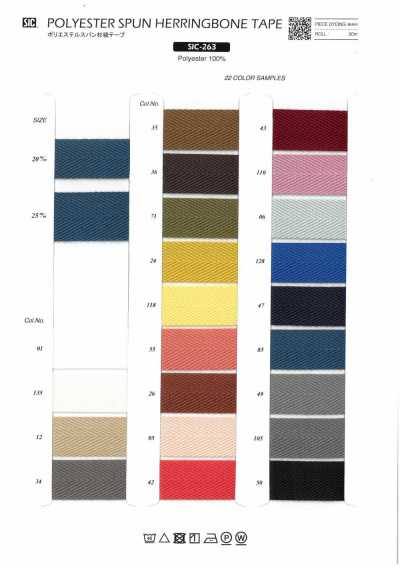
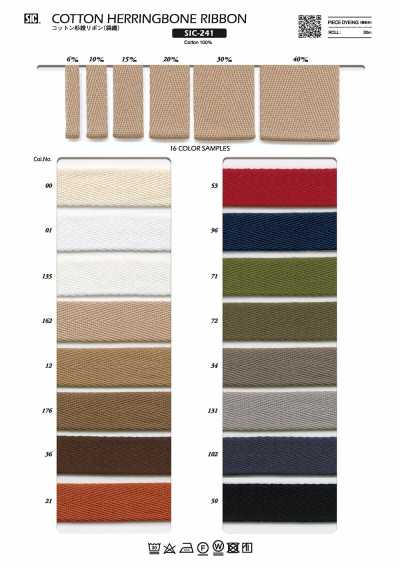
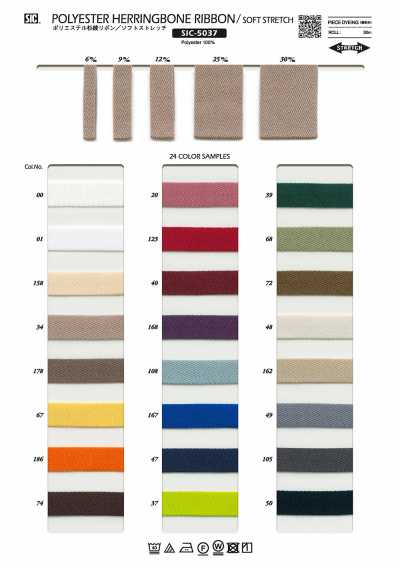
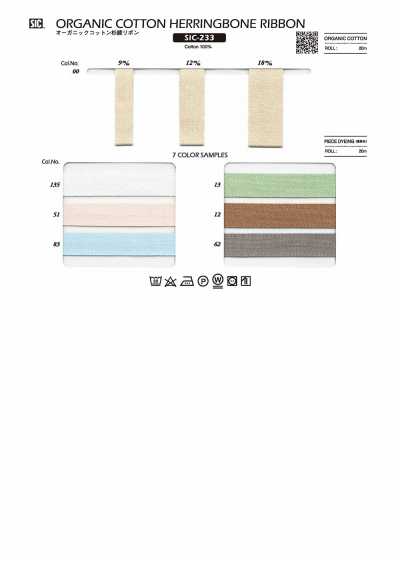
Cotton versions have a natural feel and are easy to sew, so they are used for apparel reinforcement and casual trim. Polyester versions dry relatively quickly and are suitable for applications where shape change should be minimized. Blend ratios and post-processing also need to be checked.
- Weave pattern: A continuous diagonal herringbone pattern.
- Shape: Generally a flat tape, different from cord or round braid.
- Edges: The edges are woven as selvedges, but the cut ends should be finished as needed.
How Width Is Expressed and Main Applications
Width is generally shown in millimeters, and the finished width should be checked before selecting. Even with the same width, the appearance changes depending on thickness and pattern size, so consider how it fits into seam allowances, stitch width, and even the inside dimensions of any hardware it will pass through.
Main applications include reinforcement of areas that stretch easily, such as necklines, shoulder seams, and front plackets; holding seam allowances in place; finishing facings and inside edges; loops; handles; and decoration. When used visibly on the outside, color contrast with the garment fabric and the direction of the pattern also affect the final look.
Selection and Handling Notes
For reinforcement purposes, check in advance the stretch direction of the area to be sewn and the stretch of the tape. Woven herringbone tape is not usually intended as a highly elastic tape, but it may stretch slightly depending on the weave structure and material. For areas where stretch prevention is needed, also consider a stretch-preventing tape suitable for the application.
When washing or garment washing is involved, the shrinkage and colorfastness of the garment fabric and the tape may differ. Conduct testing before sewing, and prewash if necessary. Check the cut edges for fraying, and choose a finish suited to the material, such as folding under, sewing in, or heat sealing.
Differences from Similar Terms
Herringbone refers to the herringbone pattern itself, as seen in woven or knitted materials. Woven herringbone tape refers to that pattern applied to a tape-shaped trim. Twill is a weave structure with diagonal ridges, while herringbone is seen as a pattern in which the direction of the twill reverses partway through.
Bias tape is tape cut and processed on the bias grain of the fabric, and is characterized by how easily it follows curves. Woven herringbone tape is a woven flat tape, so its behavior along curves differs depending on the application.
Frequently Asked Questions
Can woven herringbone tape be used instead of stretch-preventing tape?
It can be used for light reinforcement or to hold seam allowances in place, but woven herringbone tape is generally not a material specified for stretch-prevention performance. For necklines, shoulder seams, pocket openings, and other areas where dimensional stability is important, choose a dedicated stretch-preventing tape according to the stretch direction, thickness, and whether it is adhesive-backed.
How do you choose the width of woven herringbone tape?
Choose based on the seam allowance width, the area you want to show, the stitch position, and the inside dimension if it will pass through hardware or loops. When used inside a seam allowance as reinforcement, it is important to check for any protrusion during sewing; when used visibly, check the balance between the pattern size and the garment fabric.
Does woven herringbone tape shrink when washed?
The degree of shrinkage depends on the material, weave density, dyeing, and finishing process. In particular, items containing natural fibers may develop sewing wrinkles or waviness due to differences in shrinkage rate from the garment fabric. It is reassuring to conduct a washing test with the garment fabric before full production.
- Browse Herringbone products
- Products with material "Cotton"
- Products with material "Polyester"
- Products for style "For Shirts/blouses"
- Products for style "For Outerwear/blousons/coats"
- Products for style "For Pants"
- Products for style "For Bags"
- Products for style "For Uniforms/Workwear"
- Browse Ribbon, Tape, Cord products