Knit Interfacing
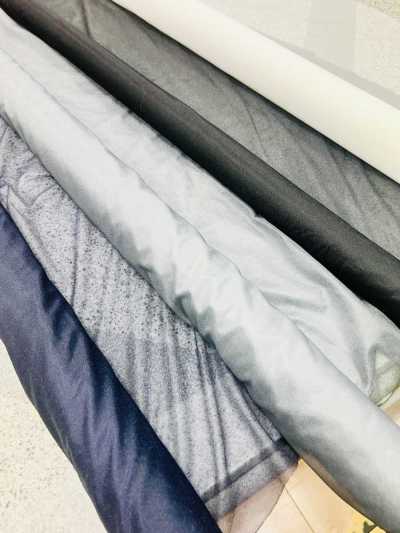
Knit interfacing is an interfacing made with a knitted base fabric, used as a secondary material to provide shape retention to collars, front openings, facings, and similar areas while preserving the stretch and softness of the outer fabric.
Contents6 sections
Definition and Overview
Knitted interlining is an interlining widely used as fusible interlining, with adhesive resin applied to a knitted base fabric. Because of its loop structure, it is softer than woven interlining and more likely to follow the movement of stretchable outer fabric.
Tricot interlining is sometimes treated as another name for knitted interlining. Tricot is a type of warp knitting, and in practice the term generally refers to knitted interlining made with a tricot-knitted base fabric.
Areas of Use and Role
It is mainly used in areas where shape needs to be maintained or stretch needs to be controlled, such as collars, collar stands, plackets, cuffs, facings, pocket openings, and the waist area. It reinforces areas that would be unreliable with the outer fabric alone and helps stabilize the appearance after sewing.
For cut-and-sew items and thin knit materials, it is important that the interlining does not interfere with the stretch of the outer fabric. By applying the appropriate knitted interlining only to the necessary areas, it is easier to reduce pulling and excessive stiffness when worn.
Materials and Types
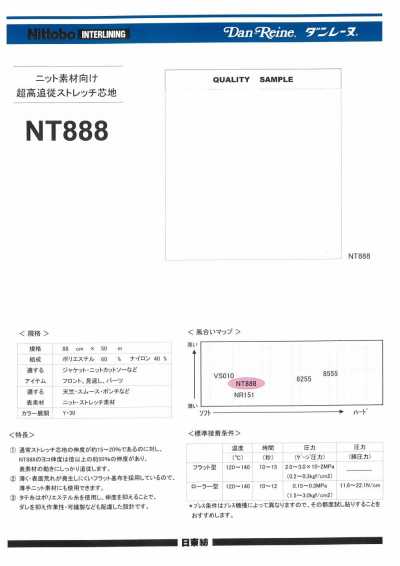
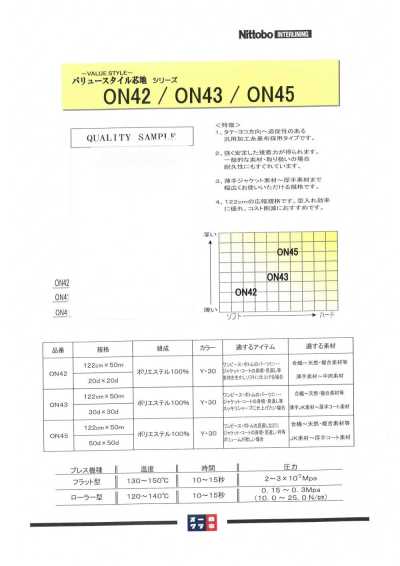
Synthetic fibers such as polyester are often used for the base fabric, and elasticity, resilience, and post-bonding stiffness vary depending on the knitting method, thickness, fabric weight, and the type and application state of the adhesive resin. Whether it stretches vertically or horizontally also differs by product number.
There are adhesive resins arranged in dot patterns and other types, which affect adhesion to the outer fabric and the hand feel. Depending on the application, the bonded condition after washing or dry cleaning is also considered when selecting the material.
- For thin fabrics: A type that helps preserve the hand feel and drape of lightweight materials.
- For medium-weight and heavy fabrics: Used when stronger shape retention is needed for collars, front edges, and similar areas.
- Stretch-compatible type: A type that easily follows the movement of stretch fabrics.
How to Choose and Precautions
Select it based on the thickness of the outer fabric, stretch direction, surface texture, and the desired finished stiffness. If the interlining is too stiff compared with the outer fabric, the fused result may look unnatural or the interlining alone may pull during wear.
For thin outer fabrics or light-colored outer fabrics, attention is also needed for the color of the interlining, adhesive bleed-through, and texture show-through on the surface. The combination of outer fabric and interlining should be test-fused before mass production to confirm the hand feel and appearance.
- Check the stretch direction of both the outer fabric and the interlining.
- Confirm the condition not only after bonding, but also after washing or dry cleaning.
- For collars and plackets, consider the required stiffness for each area separately.
Bonding and Sewing Precautions
When bonding, it is essential to follow the temperature, pressure, and time specified for each interlining. If the conditions are insufficient, peeling becomes more likely, while excessive heat or pressure may cause glossing, shrinkage, or adhesive bleed-through on the outer fabric.
After bonding, allow it to cool sufficiently before handling to stabilize the bonded condition. In sewing, pay attention to step differences between fused and unfused sections and to waviness caused by differences in stretch, and adjust the needle, thread, and feed settings to match the outer fabric.
Knitted interlining is more flexible than woven interlining and blends well with stretch materials, but it is not an interlining that completely stops stretch. For areas that need strong shape retention or stretch prevention, use woven interlining, nonwoven interlining, or stay tape as appropriate for the application.
Frequently Asked Questions
How do you choose between knitted interlining and woven interlining?
Knitted interlining is suitable for areas where you want to preserve the softness and stretch of the outer fabric. Woven interlining has stability from the grain and is used when stronger shape retention or stretch prevention is needed. The decision is made through test-fusing based on the outer fabric and the required stiffness.
Can knitted interlining be used for items other than cut-and-sew products?
Yes. It can be used not only for knit materials, but also for thin, soft woven fabrics, and for shirts, blouses, dresses, and similar items that need a moderate degree of followability. However, because bonding suitability varies depending on the structure and finish of the outer fabric, prior confirmation is necessary.
What causes waviness after applying knitted interlining?
The main causes are differences in shrinkage between the outer fabric and the interlining, mismatch in stretch direction, and unsuitable bonding temperature, pressure, or time. Bond without stretching the outer fabric, test under the recommended conditions, and then check the appearance after cooling as well as after washing.
![55/LG [Outlet] Vilene Paper-Type Fusible Interfacing](/img/item/thumb/YX/1057368_t2.jpg)