Raschel Knitting
Raschel knitting is a type of warp knitting in which a large number of warp threads are fed to the needles and knitted in the warp direction, producing fabrics with a wide range of looks such as mesh, lace, and heavy materials.
Contents6 sections
Definition and Overview
Raschel knitting is a representative warp knitting structure that uses yarns arranged in the lengthwise direction. Because loops are formed by moving the yarns left and right, it is easy to create open mesh, patterns, and three-dimensional effects, and it is characterized by a wide design range for knitted fabric.
“Raschel” does not refer to a material name, but to the knitting method and the knitted fabric made with it. Even with the same Raschel knitting, the properties can vary greatly from lightweight to heavyweight depending on the fiber used, yarn thickness, knitting structure, and finishing process.
Features and Appearance
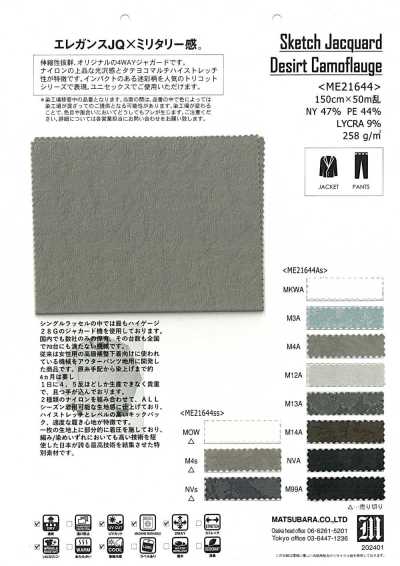
In general, Raschel fabric tends to hold its shape better than circular-knit jersey and has relatively little stretch. However, some versions are given elasticity through the structure or by interknitting polyurethane, so it is important to check the stretch in each direction.
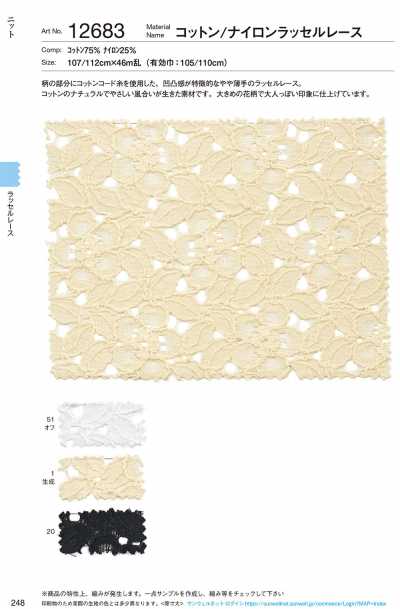
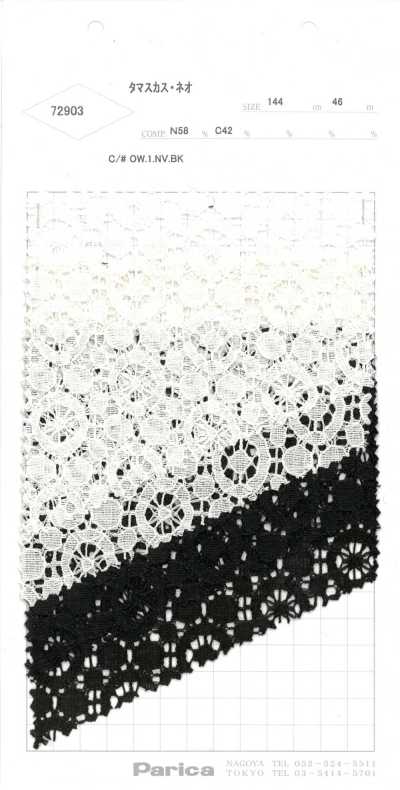
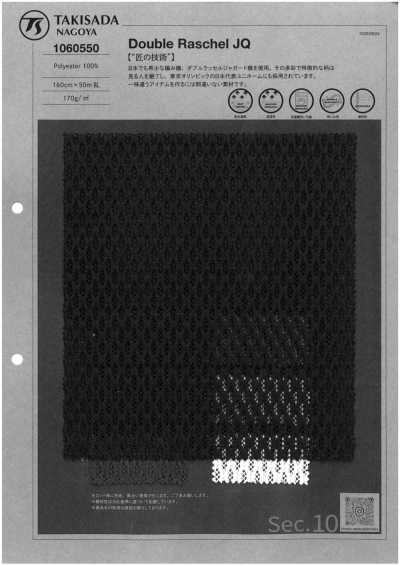
It is a fabric with a wide range of appearances, including coarse mesh, delicate lace, brushed pile-like textures, and thick three-dimensional structures. Varieties with large mesh openings are good for breathability, but sheerness and snagging can become issues.
Main Applications
Raschel knitting is used for lingerie, innerwear, blouses, and decorative sections of dresses that take advantage of lace and net. Mesh structures are used for sportswear, hats, and bags, while heavyweight or pile-like structures are also used for outerwear, bedding, and interior applications.
Thin, sheer types are suited to spring and summer layering or panel switching, while bulky types are suited to outer fabric or accessory applications in autumn and winter. When deciding on an application, check not only the appearance but also the required strength, sheerness, feel against the skin, and stretch.
How to Choose and Handling Precautions
On a fabric swatch, check the front and back, stretch in the lengthwise, crosswise, and diagonal directions, mesh size, sheerness, and ease of fraying at the edges. For patterned Raschel fabric, the impression changes depending on the cutting direction and pattern placement, so consider yardage and pattern matching in advance.
Shrinkage and changes in dimensions after washing depend on the type of fiber and the finishing process. Before mass production, carry out washing tests and sewing tests, and handle the fabric according to the care label. For mesh and lace, using a laundry bag and avoiding friction with other garments may be effective.
In sewing, pulling the knitted fabric too strongly can cause seam waviness or stitch misalignment. Choose needles, thread, and feed settings that suit the fabric, and if necessary use stretch tape or lightweight interfacing together to stabilize seam allowances and openings.
Differences from Similar Terms
Warp knitting is the general term for the method of knitting with yarns arranged in the lengthwise direction, and Raschel knitting is one type of it. Tricot is also a type of warp knitting, but while it generally makes it easy to create a fine, smooth surface, Raschel knitting is better suited to creating relatively coarse mesh, complex patterns, and thick structures.
Raschel lace refers to lace made with Raschel knitting. Mesh, on the other hand, is a general term for a mesh-like appearance or structure, and can also be made by methods other than Raschel knitting.
Frequently Asked Questions
Does Raschel knitting stretch?
Raschel knitting generally holds its shape better than circular knitting and tends to have relatively little stretch. However, elasticity varies greatly depending on the knitting structure, yarn usage, and whether polyurethane is included. Please check the stretch and recovery in the lengthwise, crosswise, and diagonal directions using the actual product.
What is the difference between Raschel knitting and tricot?
Both are warp knits, but Raschel knitting is a method that easily creates varied structures such as mesh, lace, and three-dimensional patterns, and can also handle thicker yarns more easily. Tricot generally has finer stitches and is used for knitted fabric with a smooth, uniform surface.