Polypropylene Webbing
PP tape is a narrow woven tape made from threads whose main raw material is polypropylene, and it is used for bag handles, belts, reinforcing components, and more, taking advantage of its light weight and water resistance.
Contents6 sections
Definition and Overview
PP tape is a strip-shaped auxiliary material made from polypropylene (PP) fibers. In general, it refers to a narrow woven fabric, that is, webbing woven from warp and weft threads, but in distribution it may also be used to include similar flat tapes made by knitting or braiding.
In apparel, it is used for waist belts, adjuster tape, reinforcement tape, and more. In bags and miscellaneous goods, it is often used as a handle, shoulder strap, or load-bearing securing tape.
Materials and Structure
Polypropylene is a lightweight synthetic fiber that does not easily absorb water and has relatively little increase in weight when wet. It may also take advantage of chemical resistance, but the weather resistance, abrasion resistance, and strength required for the application must be checked for each product.
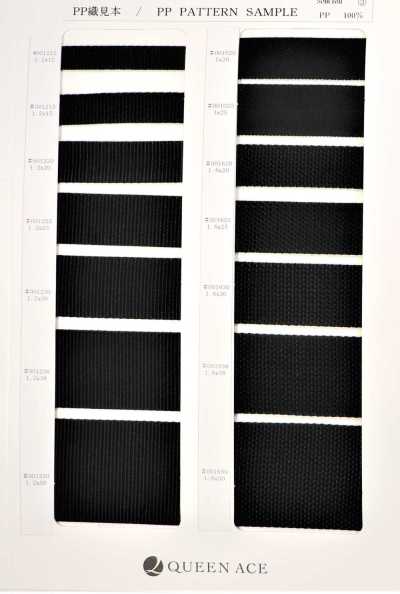
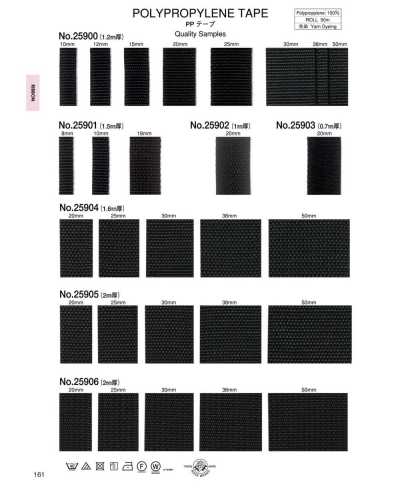
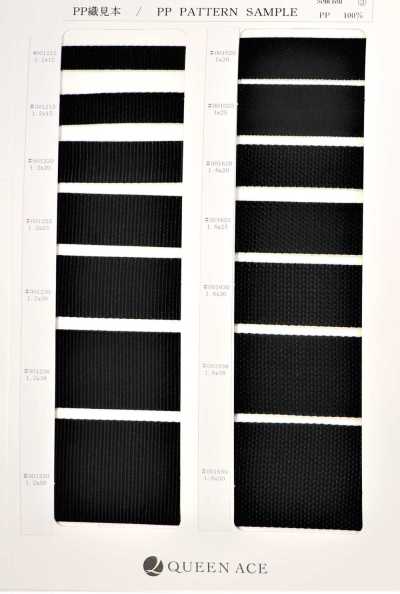
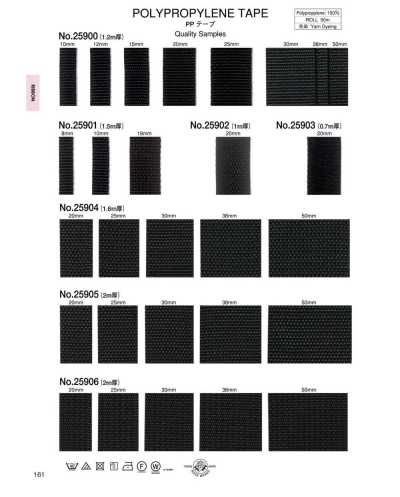
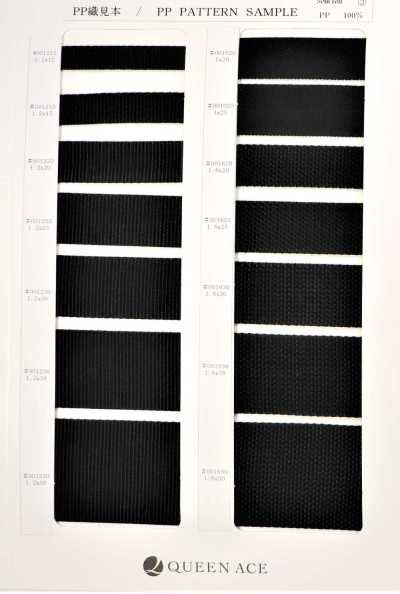
Structures include plain weave, twill weave, and herringbone-like patterns, and the feel and sense of strength change depending on thread thickness, picks, number of threads, and thickness. While those with a smooth surface tend to shed dirt more easily, slipperiness varies depending on the structure and finish.
- Plain weave: The surface is relatively flat and used for general purposes.
- Twill weave and herringbone-like patterns: Diagonal ridges are visible, making it easy to give flexibility and a decorative appearance.
- Knitted or braided structures: The way they stretch, thickness, and edge stability differ from woven tape, so specification confirmation is necessary.
How to Read Width and Specifications
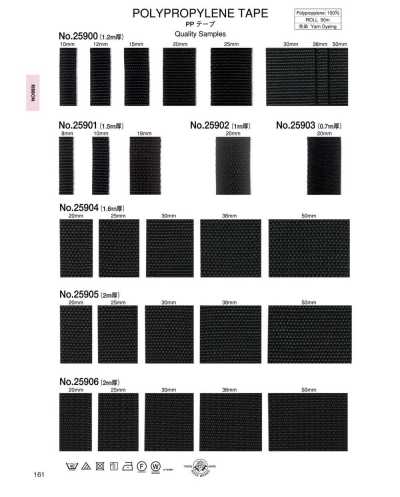
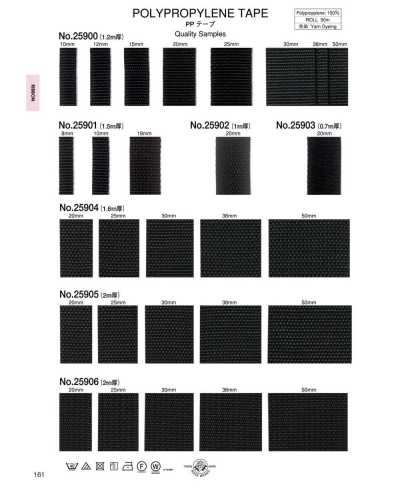
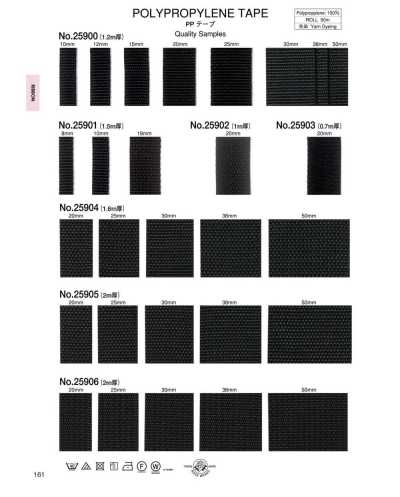
PP tape is usually specified by finished width in millimeters. For uses that pass through hardware, check the combination of the inside dimensions of a D ring or slide adjuster and the tape width, and consider both ease of threading and resistance to slipping out.
Width alone cannot determine performance. Sewability and how it stretches under load vary depending on thickness, structure, density, yarn usage, and edge stiffness. For applications requiring strength, confirm the sewn area, including the stitching, under conditions close to actual use.
Main Applications
In apparel, it is used for belts, waist adjustment sections, shoulder straps, reinforcement of facings and seam allowances, and decorative line tape. For areas intended to stretch, the basic choice is elastic band or stretch tape rather than PP tape.
In bags, outdoor goods, uniforms, and similar items, it is used for handles, shoulder straps, belts that pass through buckles, and reinforcement around pull tabs. For areas that touch the skin directly, also check thickness, edge stiffness, and surface friction.
Selection and Handling Notes
Choose the required width, thickness, texture, color, compatibility with hardware, and strength after sewing according to the application. For uses where load is applied repeatedly, it is important to design the specification including not only the tape itself but also the textile to which it is sewn, seam allowance, stitches, and bar tacks.
The cut ends of woven tape may fray. Some product numbers can have their ends sealed by heat, but polypropylene is easily affected by heat, so check the end-finishing method in advance to avoid deformation, hardening, and discoloration.
Because it generally does not absorb much water, it tends to dry quickly after washing, but high-temperature irons, dryers, and heat presses can cause shrinkage or deformation. Washing durability, color transfer, and changes from sunlight should be tested according to the tape and product washing conditions.
Frequently Asked Questions
How should PP tape and polyester tape be used differently?
PP tape is suitable for applications that prioritize light weight and low water absorption. On the other hand, polyester tape may be chosen for weather resistance, heat resistance, strength, color development, and abrasion resistance. Required performance also varies depending on the structure and thickness, so rather than deciding by material name alone, compare them through the usage environment and prototype evaluation.
Can PP tape be washed?
In many cases, it can be used in products that are washed with water, but whether it can be washed should be judged not by the tape alone but by the labeling conditions for the sewn textile and the product as a whole. High-temperature drying and ironing may cause deformation or shrinkage, so it is important to conduct washing tests and appearance checks before mass production.
How can fraying at the ends of PP tape be prevented?
Methods include folding the ends and sewing them in, covering the ends with piping or parts, and applying anti-fray treatment. Heat cutting may harden the ends, but caution is needed for applications where hard edges touch the skin. Choose a treatment suited to the tape structure and finish, and confirm the appearance and durability.