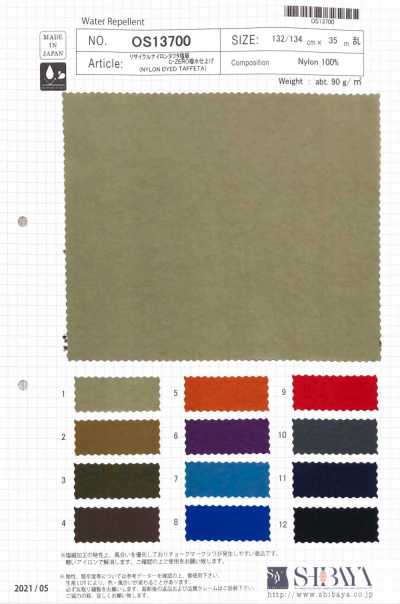
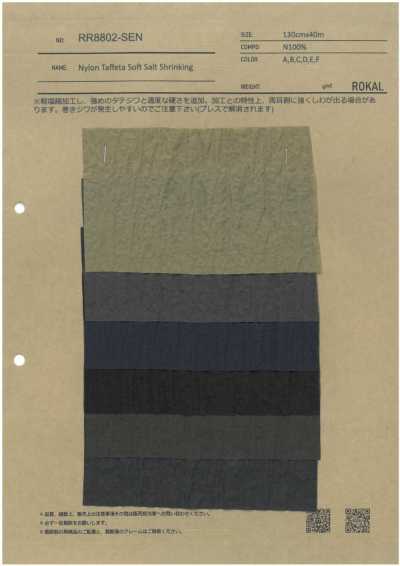
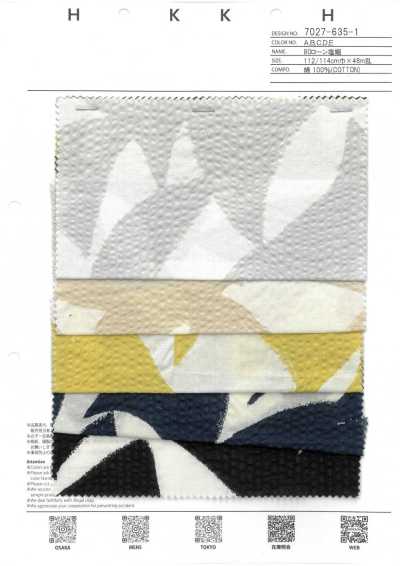
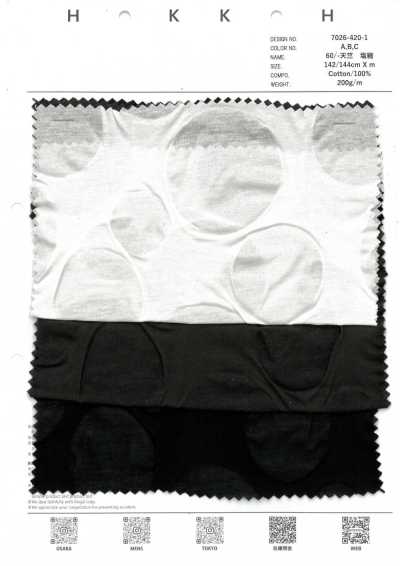
Salt Shrink Finish
Salt shrink finish is a post-processing technique that uses differences in fiber shrinkage caused by chemicals to give the textile surface texture, puckering, and a raised feel.
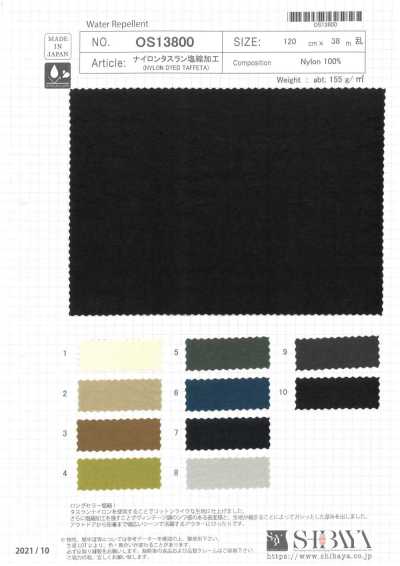
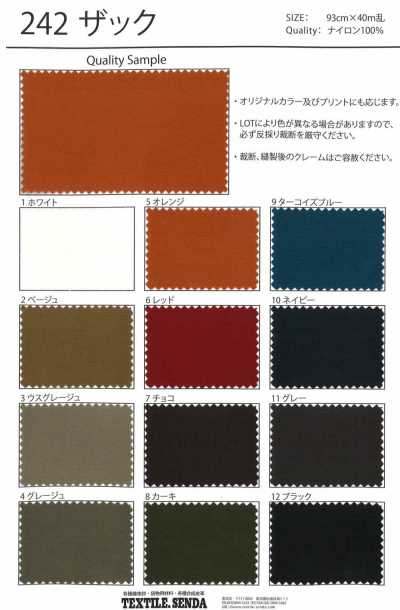
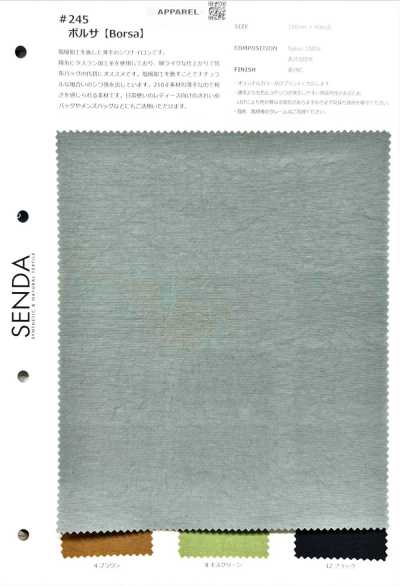
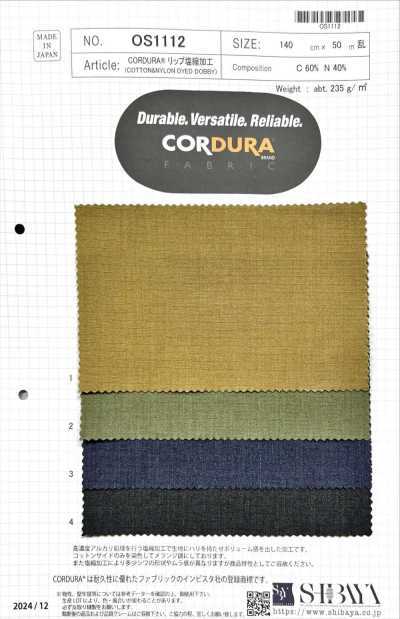
Contents6 sections
Definition and Overview
Salt shrink finish is a finishing process that uses chemicals to shrink part or all of a textile, creating natural irregularities and a crinkled texture on the surface.
It does not refer to the weave or knit structure itself, but to a type of post-finishing applied to woven and knitted fabrics. Because the degree of shrinkage varies greatly depending on the material composition, structure, and processing method, the appearance and hand feel are not uniform even with the same salt shrink finish.
Features
Irregular crinkles, ripples, and swelling are likely to appear on the surface, creating shadows and a raised look not found in flat textiles. In designs that reduce the area in contact with the skin, it may provide a smooth touch and a cool feel.
The shrinkage caused by processing affects the textile's width, length, density, and thickness. Because the strength of the irregular surface depends on the material combination and processing conditions, it is important to confirm not only the texture but also the final dimensions and ease of cutting and sewing.
- A raised appearance created by crinkles and irregularities
- A natural look that makes use of uneven shadows
- A light touch that keeps the fabric away from the skin
- Shrinkage and dimensional changes that vary depending on processing conditions
Main Applications
It is used for shirts, blouses, dresses, skirts, and similar items, taking advantage of its irregular appearance and skin separation. Because it easily creates a light look, it is often adopted for spring and summer clothing, but it is not limited to any season depending on the thickness and design of the textile.
Even in solid fabrics, the shadows created by processing become a design element, making it suitable for items with restrained decoration. In gathered or relaxed silhouettes, the textured surface is easier to show, while with detailed paneling or precise pattern matching, differences in the finish should be noted.
Selection and Handling Notes
During planning, check the post-processing textile width, fabric weight, shrinkage rate, and direction of the texture with a sample. Set the required yardage based on the dimensional difference before and after processing, and in mass production it is important to check variations in texture and dimensions from lot to lot.
Before sewing, perform straightening as needed, and adjust pressing conditions and feeding during sewing so as not to flatten the irregular surface too much. For areas where fusible interlining is used, confirm in advance through testing whether uneven bonding or appearance changes occur due to the surface texture.
For home laundering, follow the care label for each product. Because processed items may change appearance due to strong friction, excessive pulling, or high-temperature pressing, it is necessary to verify washing and finishing conditions through product testing.
Differences from Similar Terms
Seersucker is a fabric or structure name for striped crinkles formed by differences in warp tension or weave structure. Salt shrink finish is a processing method that uses shrinkage caused by chemicals, and the resulting texture is not limited to stripes but can also produce irregular unevenness.
Ripple finish is also treated as a process that creates unevenness by causing partial shrinkage with chemicals or similar means. Since naming and processing methods are used differently in practice, do not judge by the name alone; check the material, processed area, and shape of the uneven surface with a fabric sample.
Fulling is a process mainly for wool materials that shrinks and entangles the structure to increase thickness and warmth retention. It differs from salt shrink finish, which creates surface depth, in terms of target material, purpose, and final characteristics.
Frequently Asked Questions
Will a salt shrink finish textile shrink further in washing?
Even if shrinkage has already been given through processing, dimensional change after washing may still occur. Because differences arise depending on the material, structure, processing conditions, and washing method, washing tests should be carried out during planning and production to confirm shrinkage rate and appearance changes. Finished products should be handled according to the care label.
Are salt shrink finish and seersucker the same?
No. Seersucker is a fabric characterized by striped crinkles mainly caused by differences in warp tension or structure. Salt shrink finish is a post-processing method that uses differences in shrinkability caused by chemicals and can express irregular unevenness and shadows other than stripes.
What should be noted when sewing salt shrink finish textiles?
Because the uneven surface can make fabric feeding unstable, seam puckering and misalignment may occur. Before cutting, confirm the grainline and dimensions after processing, and adjust the needle, sewing thread, presser foot pressure, and feed conditions through test stitching. A finishing method that does not flatten the texture under pressing is also important.