Check Pattern
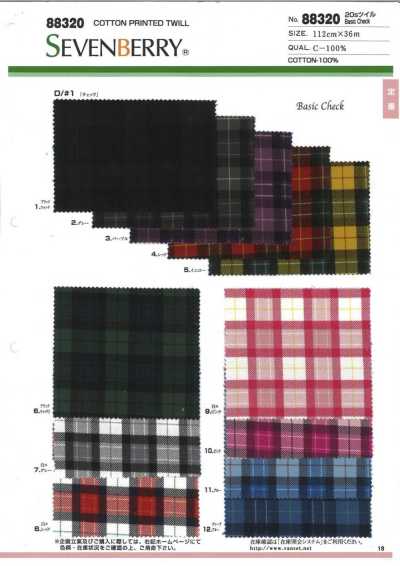
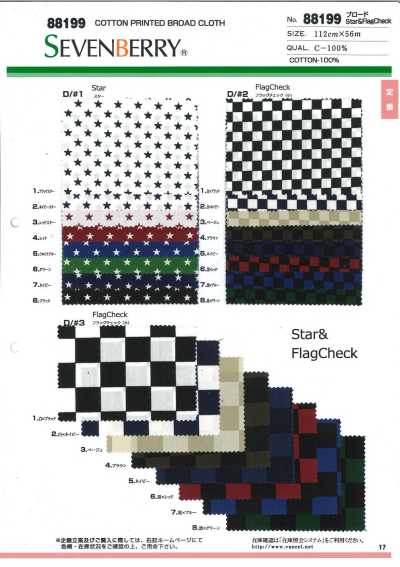
A check pattern is a general term for a grid-like pattern in which vertical and horizontal lines, bands, or color divisions intersect to create a repeated pattern of squares or rectangles.
![S-941 [Outlet] Yamanashi Fujiyoshida 100% Silk Check Pattern Gray](/img/item/thumb/YX/1062323_t2.jpg)
Contents5 sections
Definition and Overview
Check patterns are a general term for lattice-like patterns formed by intersecting vertical and horizontal lines or bands of color. The impression changes greatly depending on the size of the lattice, the thickness of the lines, the color scheme, and how the intersections appear, so they are used in a wide range of applications, from casual to traditional and uniforms.
In woven fabrics, yarn dyed checks, in which colored yarns are arranged in the warp and weft, are typical. There are also printed checks, which express the lattice with printing on solid textile. A pattern is not a weave structure name or material name, but a term indicating surface design.
How the Pattern Is Made and Common Names
Yarn dyed checks are made by arranging multiple pre-dyed colored yarns in the warp and weft, creating the lattice including the overlapping colors at the intersections. While the finished look tends to have depth, the pattern size changes depending on the yarn arrangement and density, so it must be checked for each textile.
Check patterns include those that repeat lattices of the same size, those that draw large frames with thick lines, and those with fine lattices that look close to solid. Names may be based on the structure of the lattice, the color scheme, applications, or regional usage, so the name alone does not determine the pattern size or production method.
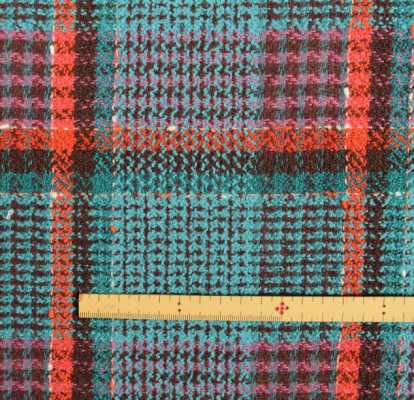
- houndstooth: a small-scale check pattern with continuous shapes resembling bird footprints.
- glen check: a pattern made by combining fine lattices, commonly seen in suiting fabrics.
- gingham: a relatively simple check pattern generally made from a combination of white or pale colors and colored yarns.
- tartan check: a name for a check pattern made by arranging multiple colored bands vertically and horizontally.
- windowpane: a pattern that draws large lattices with thin lines on the base color, resembling window frames.
Main Applications and Seasonal Feel
Check patterns are used in shirts, blouses, skirts, dresses, pants, jackets, coats, and children's clothing. Small patterns tend to look relatively understated, while large patterns and high-contrast color schemes often become a design point of the product.
The pattern itself is not tied to any specific season. Light cotton, linen, and lightweight synthetic-fiber checks may be used for spring and summer clothing, while brushed cotton or wool-like checks may be used for autumn and winter clothing. The seasonal feel is judged by the combination of material, thickness, brushed finish, and color scheme.
Notes on Fabric Selection and Cutting
When selecting fabric, confirm the repeat, which is the length of one full pattern cycle, the vertical and horizontal pattern dimensions, the pattern direction, and left-right symmetry. If the lattice is too large relative to the product size or seam lines, it may be difficult to place the pattern where intended, and the appearance may become uneven.
With check patterns, pattern matching at the center front, center back, side seams, pockets, collars, and yokes affects the quality impression. In particular, for yarn dyed lattices, it is important to straighten the grain before spreading and cutting, and to place the pattern so that the same position is taken on the left and right parts.
When pattern matching is performed, more fabric allowance is needed than for solid textile. If the pattern has an up/down direction or one-way appearance, it may not be possible to reverse parts when placing them. At the planning stage, share pattern position instructions among the pattern, marking, and cutting teams.
Frequently Asked Questions
Are check patterns and tartan checks the same?
Tartan checks are treated as a type of check pattern. Check pattern is a broad term referring to lattice patterns made with vertical and horizontal lines or bands of color, while tartan check is the name for a lattice pattern combining multiple colored bands. In product planning, confirm the color scheme, lattice structure, and pattern size with the actual sample.
How much extra fabric is needed for a check pattern compared with solid textile?
The necessary increase cannot be fixed universally because it varies depending on the size of the pattern repeat, number of pattern pieces, size range, areas where pattern matching is done, and the cutting method. If pattern matching is needed at the center front or pockets, extra fabric is required. Confirm the fabric width and repeat, then calculate the fabric requirement using the actual marker layout.
Is pattern matching necessary for printed checks as well?
Even for printed checks, if the lattice lines are clear, whether or not pattern matching is done affects the product's appearance. Regardless of whether it is yarn dyed or printed, misalignment of lines at the placket, side seams, pockets, or seam lines can stand out. Confirm the pattern direction and repeat, and specify the priority pattern matching points in the specification sheet.
![P-29 Yamanashi Fujiyoshida Check Pattern Formal Fabric [Outlet]](/img/item/thumb/YX/1062012_t2.jpg)