Chirimen
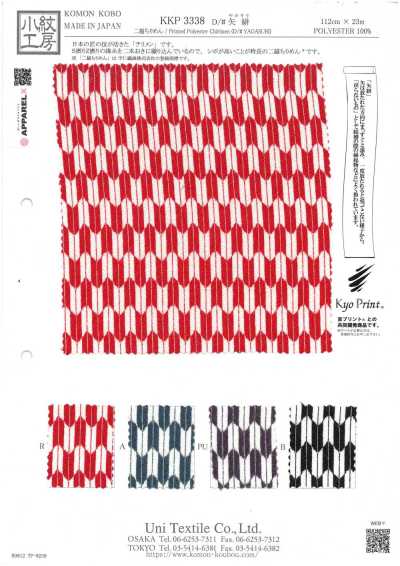
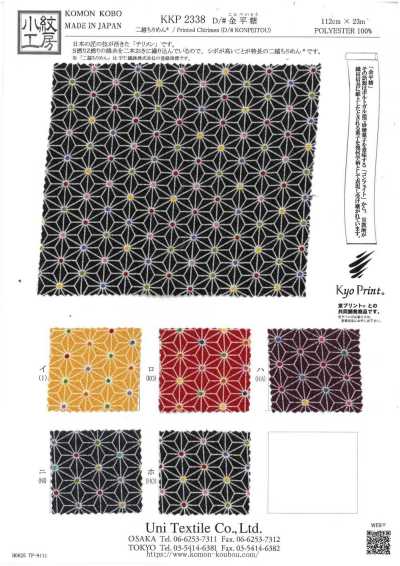
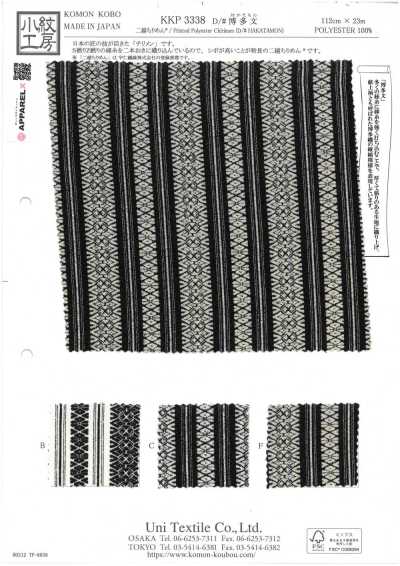
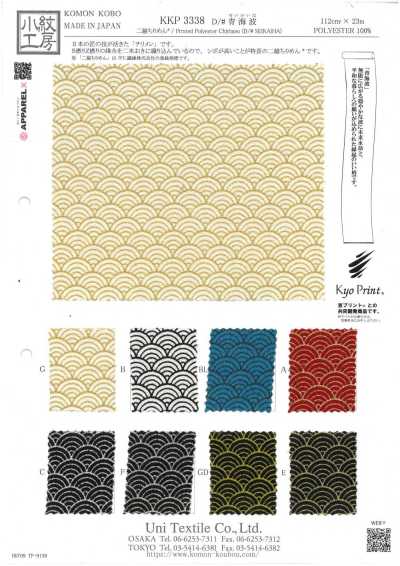
Chirimen is a general term for woven fabrics made with strongly twisted threads and characterized by fine surface irregularities called shibo.
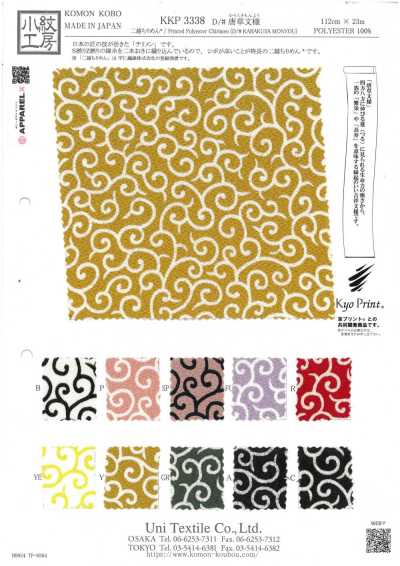
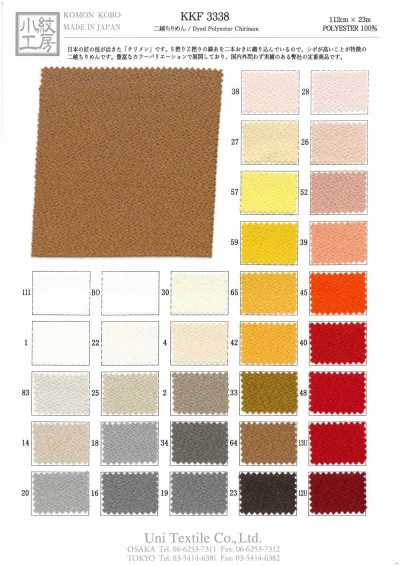
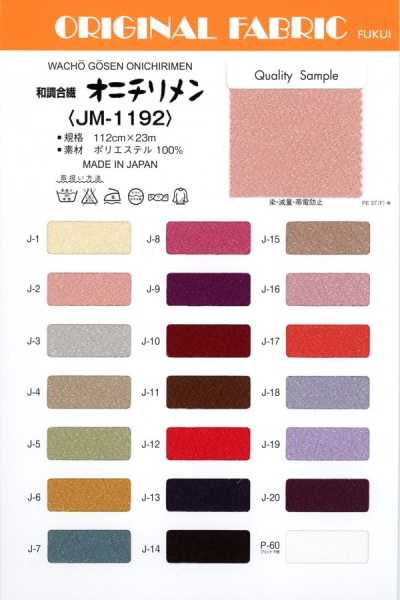
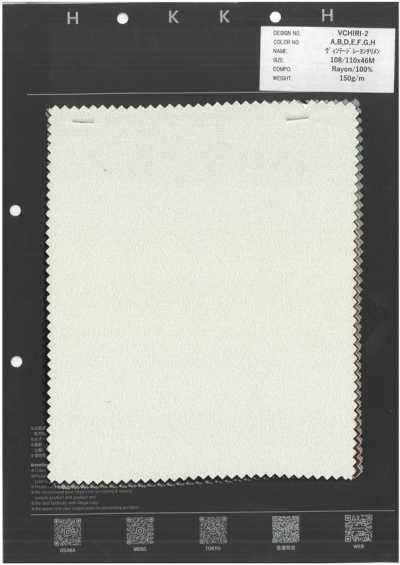
Contents6 sections
Definition and Overview
Chirimen is a woven fabric with a textured surface, made mainly with highly twisted yarn for the weft and using the tendency of the yarn to shrink during the scouring and finishing processes to create a crinkled surface. Traditionally, it refers to silk fabric, but it is now also made from polyester, rayon, and other materials.
The size, density, sheen, and thickness of the crinkles vary depending on the type of fiber, the degree of twist, the weave structure, and the finishing process. For this reason, chirimen is not treated as a material name or a single weave name, but as a name for fabrics with a distinctive surface texture.
Texture and Function
The fine crinkles create a smooth touch, a subtle and complex sheen, and a shadowed appearance. In lightweight fabrics, a supple drape is easy to achieve, while medium-weight and heavier fabrics can express moderate fullness and graceful fall.
The uneven surface of the fabric may make contact with the skin feel reduced, but breathability, moisture absorbency, and stretch depend on the fiber composition and density. Because it has a crinkled surface, patterns and dyeing may appear more subdued than on a smooth fabric.
Main Applications
Silk chirimen is used for kimono, obijime accessories, and other Japanese attire items. Chirimen made with polyester and similar materials is used for blouses, dresses, skirts, formalwear, linings, and decorative applications.
Lightweight types with good drape are suited to spring and summer blouses and dresses, while medium-weight types that are less sheer are suited to year-round dresses and bottoms. However, seasonal suitability should be judged together with thickness, fabric weight, fiber composition, and whether a lining is used.
Selection and Handling Notes
Depending on the application, check the fiber composition, thickness, sheerness, fineness of the crinkles, drape, and care label. Some fabrics make seams stand out easily or slip during cutting and sewing, so make a sample with the actual fabric and check compatibility with interfacing and lining as well.
Chirimen containing silk or rayon may change texture, shrink, or transfer color due to moisture and friction. Whether it can be washed depends not on the material name but on the label for each product or fabric. Before full production, it is important to confirm the shrinkage rate and changes in crinkles through water testing and washing tests.
For sewing, choose a fine needle and thread suited to the fabric to reduce seam puckering and distortion. Lightweight fabrics whose grain can easily become distorted are easier to handle if the grain is corrected before cutting, and if needed, sewing with thin paper or stabilizing interfacing can help.
Differences from Similar Terms
Crape is a general term for woven fabrics with a textured surface created by highly twisted yarn and similar methods, and chirimen is used as one type of such fabric or as a term centered on Japanese attire. In distribution, however, the two are sometimes treated as nearly synonymous, so the weave structure or material cannot be identified from the name alone.
Georgette is also a lightweight crape-type fabric with texture created by highly twisted yarn. In general, georgette often features a fine granular texture and a light sheer feel, while chirimen includes a wider range of thicknesses and materials, from Japanese attire to Western clothing. Yoryu is characterized by vertical wrinkle-like ridges, and its surface texture differs from chirimen, which overall has irregular or fine crinkles.
Frequently Asked Questions
Can chirimen be washed at home?
Whether it can be washed cannot be determined from the name chirimen alone. Items containing silk or rayon may shrink or change texture when washed with water. Always check the care label, and before production, test the actual fabric for washing.
What is the difference between chirimen and georgette?
Both are crape-type woven fabrics that express texture using highly twisted yarn and similar methods. Georgette is generally lightweight and often has a fine granular texture, while chirimen includes Japanese attire uses and varies more widely in material, thickness, and surface expression.