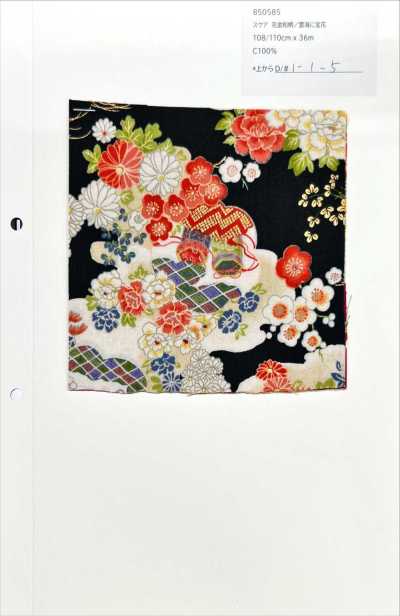
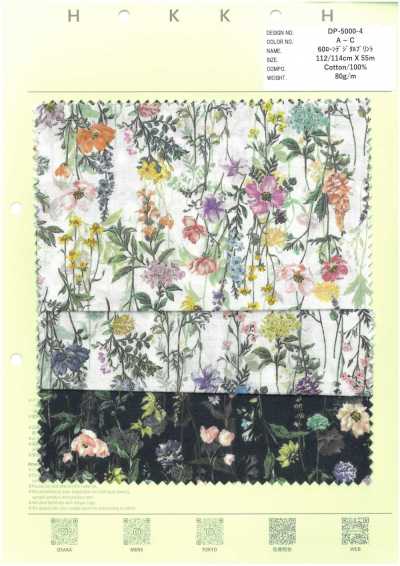
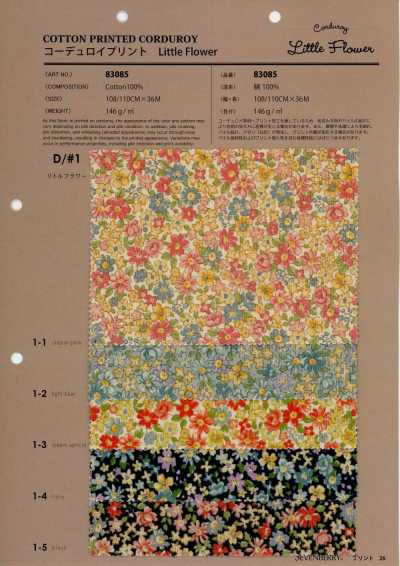
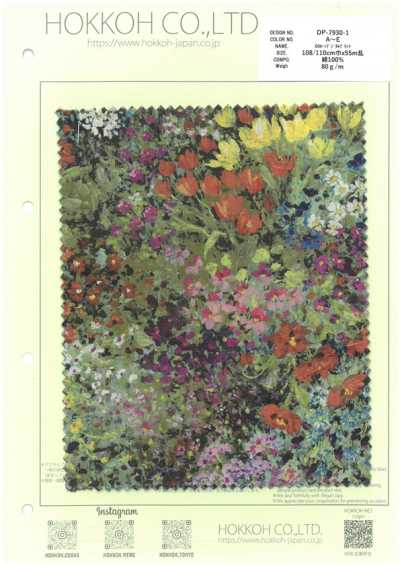
Flower Pattern
Floral pattern is a general term for patterns that depict plant motifs such as flowers, leaves, and stems. It is a decorative pattern that creates a wide range of impressions depending on the size, arrangement, color scheme, and technique used to express the motif.
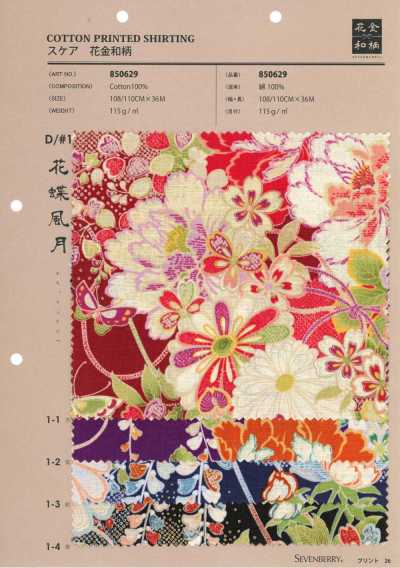
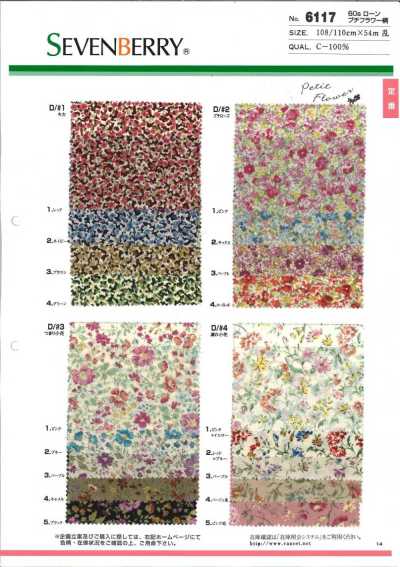
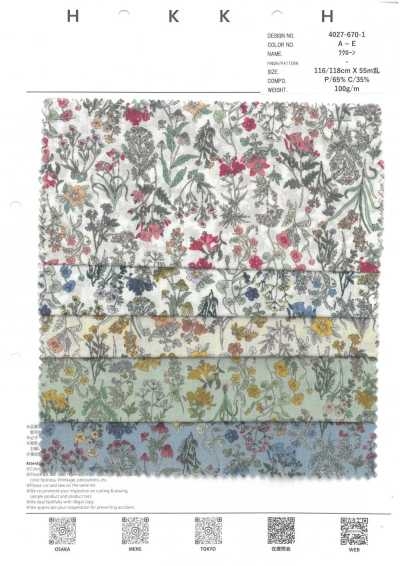
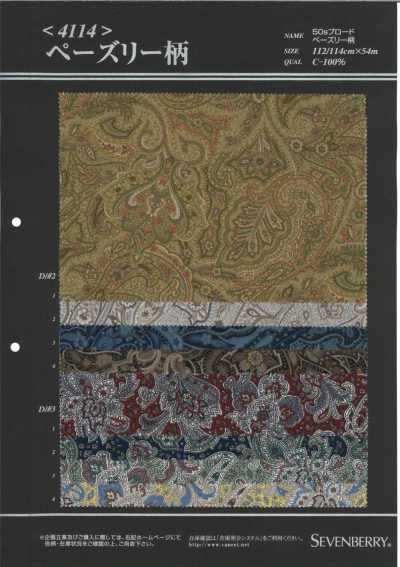
Contents6 sections
Definition and Overview
Floral pattern is the general term for motifs based on flowers. It includes not only designs that depict flowers alone, but also botanical designs that combine leaves, vines, branches, fruit, and other plant elements. While it is often expressed as a print, it can also be represented with Jacquard or embroidery.
Floral pattern is the name of a pattern, and it does not indicate the structure of woven or knitted fabrics, materials such as cotton or polyester, or fabric properties such as lightweight or heavy textiles. Even with the same floral pattern, the applications and tailoring appearance vary depending on the base fabric and the method of expression.
Pattern Formation and Naming
Floral patterns are classified by the size of the motif, how it repeats, and how realistic it is. A pattern with small flowers scattered densely is called a small floral pattern, while one with large flowers as the main feature is called a large floral pattern. Patterns that widely arrange flowers and leaves are sometimes called botanical patterns.
Pattern composition includes repeat patterns that repeat the same design at regular intervals, allover patterns that scatter flowers across the entire fabric, and placement patterns that concentrate the design on one side or near the hem. In addition, the touch of the expression, such as watercolor style, line drawing style, or realistic style, also affects the product’s impression.
- Small floral pattern: A floral pattern with small flowers arranged repeatedly.
- Large floral pattern: A floral pattern in which large flower motifs stand out.
- Botanical pattern: A pattern that includes plant elements such as leaves and stems in addition to flowers.
- Chintz: A pattern name often used for decorative motifs combining flowers and plants.
Main Applications and Seasonality
Floral patterns are often used for blouses, shirts, skirts, one-piece dresses, and dresses. Small floral patterns can create a relatively delicate and light impression, while large floral patterns and high-contrast color combinations add brightness and presence to the product.
In spring and summer, floral patterns in bright color combinations are often used on light textiles such as lawn, voile, and chiffon. On the other hand, even in autumn and winter, choosing floral patterns in deep tones or textiles with a brushed feel makes it possible to create expressions suited to the season. There is no seasonal restriction on the pattern itself.
Fabric Selection and Cutting Considerations
When selecting floral textiles, confirm the relationship between the size of the pattern and the dimensions of the garment parts. Large motifs may be cut off or appear unbalanced on narrow collars or cuffs. On lightweight textiles, also check sheerness, drape, and how the print looks on the reverse side.
If flowers or stems have a clear up-down direction, cut them as one-way patterns. If parts are placed upside down, the pattern will appear inverted, which may increase the required fabric length. It is also necessary at the planning stage to decide whether the main motif positions should be aligned on the left and right front panels, plackets, pockets, and so on.
For large-repeat floral patterns or specifications in which the pattern continues across side seams, allow extra fabric for pattern matching. Before mass production, it is important to use the actual fabric width and pattern repeat to make markings and confirm the pattern placement.
- Pattern direction: Check the up-down direction of flowers, stems, and leaves, as well as the grain direction.
- Pattern matching: Check visible areas such as the center front, side seams, and pocket openings.
- Fabric length: Allow extra fabric for one-way patterns and large repeat patterns.
- Pre-cutting check: Also confirm pattern placement and color differences for each roll.
Differences from Similar Terms
A small floral pattern is a type of floral pattern that uses relatively small flower motifs. Botanical patterns also use plants as their subject, but they do not necessarily require flowers and may be composed mainly of leaves and branches. Chintz often refers to decorative patterns composed of flowers and plants, and overlaps with floral patterns.
Print is a processing method that expresses patterns on the surface of fabric with dyes or pigments. Floral pattern indicates the content of the design, so a floral pattern can be expressed by printing, weaving, or embroidery.
Frequently Asked Questions
What is the difference between a floral pattern and a botanical pattern?
A floral pattern is the general term for patterns centered on flowers. Botanical pattern is often used to refer to plant motifs in general, including not only flowers but also leaves, branches, stems, and fruit. However, in actual product names and planning names, the two terms may sometimes be used interchangeably.
Do floral textiles require more fabric length?
For one-way patterns with an up-down direction in the flowers or stems, or patterns with large repeats, the fabric length may increase compared with solid textiles because the parts must be arranged in the same direction and the pattern placement must also be adjusted. Confirmation is made through marking that reflects the fabric width, pattern repeat, and size range.
Which areas should be prioritized for pattern matching in floral patterns?
Generally, priority is given to areas that are easy to see when worn, such as the center front, collar, placket, side seams, and pocket openings. If it is difficult to match every seam perfectly, it is smoother to clearly specify in the specification sheet which parts should be matched.