Shirt Interfacing
Shirt interfacing is a type of interfacing used in shirt and blouse collars, front plackets, cuffs, and similar areas to shape the garment and provide appropriate firmness and durability.

Contents6 sections
Definition and Overview
Shirt interfacing is a general term for interlining suitable for shirt tailoring. It is placed on the inside of the outer fabric to supplement shape retention and firmness that thin textile alone cannot easily provide. In many cases, fusible interlining is used, but depending on specifications, it may also be sewn in.
Compared with fusible interlining and woven interlining, which refer to interlining in general, shirt interfacing is a term used especially for the thinness, suppleness, and wash stability required in shirt areas such as collars, cuffs, and front plackets.
Areas Used and Role
The main application areas are the collar, collar stand, cuffs, sleeve placket, and front placket. In the collar, it shapes the outline and stand; in the cuffs, it preserves the shape when buttoned. In the front placket, it suppresses stretching and distortion around the buttonholes and makes opening and closing easier.
Even in the same shirt, a slightly firmer interfacing may be used for the collar and cuffs, while a thinner interfacing that does not impair the hand of the outer fabric may be selected for the front placket. Interfacing selection affects both comfort and appearance.
Materials and Types
Shirt interfacing includes woven interfacing, made from woven fabric; nonwoven interfacing, made from nonwoven fabric; and knit interfacing, made from knitted fabric. Woven interfacing is easy to provide stability along the grain, while nonwoven interfacing is characterized by greater freedom in cutting direction.
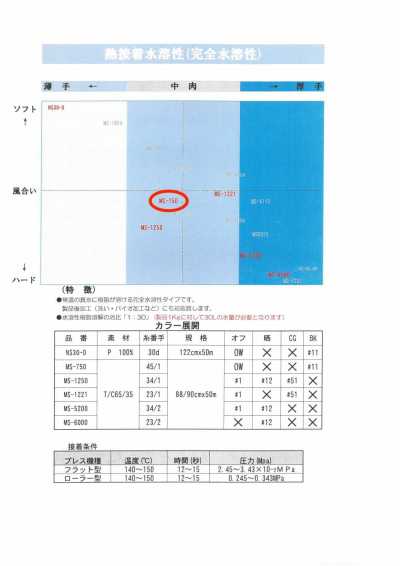
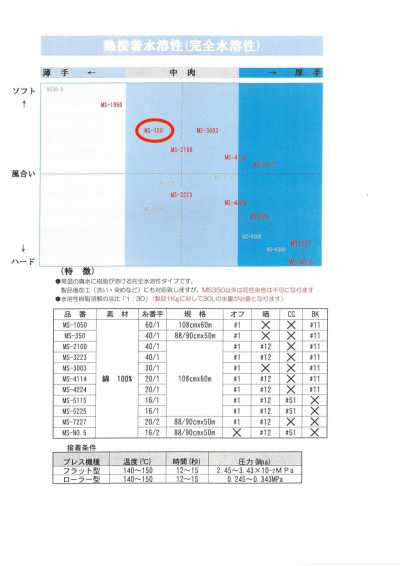
Materials such as polyester and cotton are used for the base, and fusible types have heat-melt adhesive resin on one side. Items with larger adhesive dots or higher density generally tend to give a firmer bonding feel, so compatibility with the outer fabric must be checked.
- Fusible interlining: Interlining that is bonded to the outer fabric with heat and pressure.
- Non fusible interlining: Interlining fixed by sewing in, without bonding.
- Woven interfacing: Has a woven structure and is used for neat tailoring.
- Nonwoven interfacing: A sheet-like base made by entangling fibers, with various levels of firmness depending on the application.
How to Choose and Points of Caution
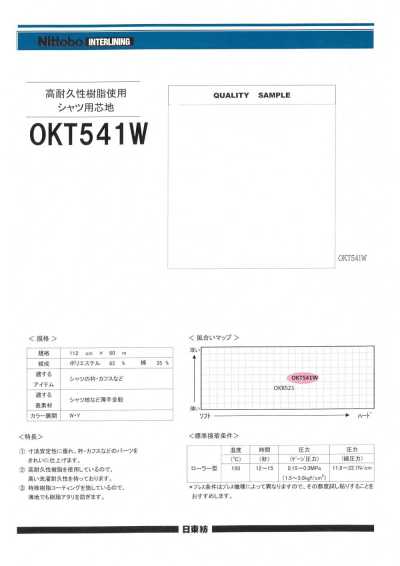
The thickness and firmness of the interfacing are selected to match the thickness, density, and softness of the outer fabric. If interfacing that is too firm is paired with a thin or soft outer fabric, the collar edge may look unnatural, or the effect of the interfacing may show through the surface. Conversely, if the interfacing is too weak, it becomes difficult to maintain the shape of the collar and cuffs.
For thin fabrics such as broadcloth and poplin, a thin interfacing that does not interfere with the suppleness of the outer fabric is selected. On the other hand, with relatively thick outer fabrics such as oxford, interfacing with the necessary shape retention is considered while balancing the firmness of the outer fabric.
When using garment-washed products, garment-dyed products, or stretch outer fabrics, shrinkage, delamination, and differences in stretch become issues. Before full production, it is important to conduct tests combining the outer fabric and interfacing, and to check the appearance and bonding condition, including after washing.
Points to Note for Bonding and Sewing
Fusible interlining is bonded at the temperature, pressure, and time specified for each interfacing as a guide. If the conditions are insufficient, adequate peel strength will not be obtained, and excessive heat or pressure may cause glossing, shrinkage, or changes in hand of the outer fabric. In mass production, the press settings are recorded and checked by lot.
Before bonding, align the grain of the outer fabric and interfacing, and unify the cutting direction. If too much interfacing enters the seam allowance at collar points or cuff ends, thickness increases and can cause step differences or difficulty in turning during sewing. Cutting the interfacing according to the pattern and seam allowance settings is necessary.
Frequently Asked Questions
Can the same interfacing be used for both the collar and cuffs?
The same interfacing can be used, but because the required firmness and appearance differ, it may be used differently by area. Check the collar for stand and outline, and the cuffs for stability when buttoned, then judge using samples combined with the outer fabric.
What causes shirt interfacing to lift or peel from the outer fabric?
Causes include bonding temperature, pressure, and time that are not suitable for the interfacing; incompatibility with the processing or texture of the outer fabric; and shrinkage differences caused by washing or drying. Before mass production, carry out bonding tests with the actual outer fabric and confirm peeling and bubbling, including after washing.