Line Tape
Line tape is a narrow flat tape sewn onto garment side seams, sleeves, collars, and similar areas to create colored lines or decoration.
Contents6 sections
Definition and Overview
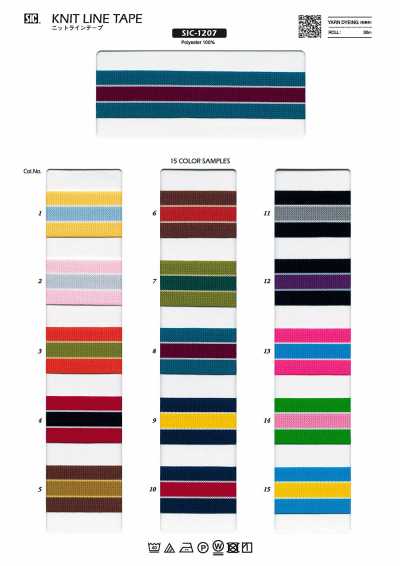
Line tape is a narrow tape placed in a straight line on the sides of garments, sleeves, hems, and similar areas to add a sporty impression or a uniform-like design. In addition to single colors, there are also styles with multiple colored lines combined.
“Side line tape” is a term that emphasizes use on the sides of pants, blousons, and similar items. “Jersey line” often refers to stripe-like side detailing seen on jerseys and similar garments, but it is not a name that limits the material or construction.
Materials and Structure
Polyester, acrylic, cotton, rayon, and similar materials are used. Polyester is relatively easy to handle, and some types make use of luster and color vividness. Cotton gives a natural texture, and rayon is a material that easily produces a lustrous appearance.
Structures include woven flat tape, knit tape, and thin flat cords similar to braided cord. Knit structures may be soft and stretchy, and flat cord-like types such as twill bamboo cord may be called line tape on sailor uniform collars and similar areas.
- Woven flat tape: relatively stable in shape and easy to use on straight sections.
- Knit tape: soft and slightly stretchable.
- Braided or flat cord-like: tends to add thickness and a three-dimensional feel, making it suitable for decorative lines.
Dimensions and Main Applications
Width is generally indicated in millimeters. Check not only the final line thickness, but also the seam allowance required, whether it is layered, and how well it follows curves. Thickness does not have a fixed standard notation, so it is important to confirm step differences during sewing with samples.
It is used for side seams on track pants and blousons, sleeve lines, switching sections on sweatshirts and cut-and-sew items, and around the collars of uniforms and sailor uniforms. It may also be used as a base tape for prints or embroidery.
Selection and Sewing Precautions
Choose compatibility with the outer fabric based mainly on color, luster, thickness, and stretch. If a non-stretch tape is attached to knit or stretch products, the seams may pull when worn, or the product’s stretch may be restricted. Select a tape with similar stretch if necessary.
If you sew while pulling the tape strongly, waviness and shrinkage are more likely to appear in the finished seam. On long straight sections, baste first and sew while keeping the left and right positions and tension even. Check the fraying tendency of the ends, and consider folding in, heat cutting, or edge finishing according to the specifications.
Post-wash shrinkage, color fading, color transfer, and changes in luster differ depending on the material. Since the difference in washing shrinkage between the outer fabric and the tape can cause puckering, conduct a washing test with the sewn product before mass production and check the appearance and dimensional changes.
Differences from Similar Terms
Tuxedo stripe often refers to a band-like decoration or switching on the side of pants, and line tape is one of the materials used to create a tuxedo stripe. The difference is that tuxedo stripe is the name of a design or part, while line tape is the name of a narrow material.
Herringbone tape and twill tape are tapes with a herringbone pattern or similar structure and appearance. Line tape is mainly a name based on its application or design and is not limited to a specific structure such as herringbone. Also, bias tape is mainly used to cover fabric edges, and its purpose differs from line tape, which is used to add decorative lines.
Frequently Asked Questions
What is the difference between line tape and tuxedo stripe?
Tuxedo stripe refers to the design or area of a band-like decoration or switching placed on the side of pants. Line tape is the narrow material sewn on to express that tuxedo stripe or sleeve lines. In addition to tape, a tuxedo stripe may also be made using a different-fabric switch.
Can line tape be sewn onto stretchy fabric?
Yes, but caution is needed if the tape stretches less than the outer fabric. When worn, the seam may pull or waviness may appear. Check the tape’s stretchability, and confirm the sewing conditions and stretch during wear with a prototype.
Do the ends of line tape fray?