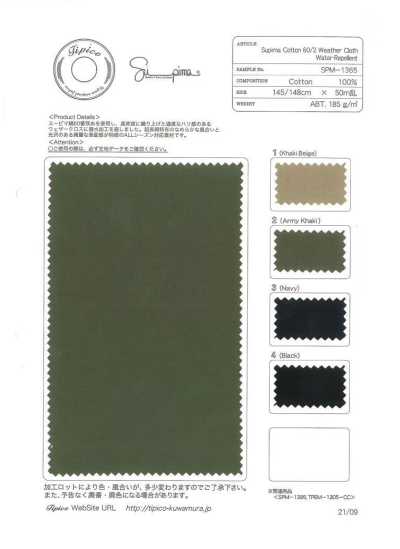
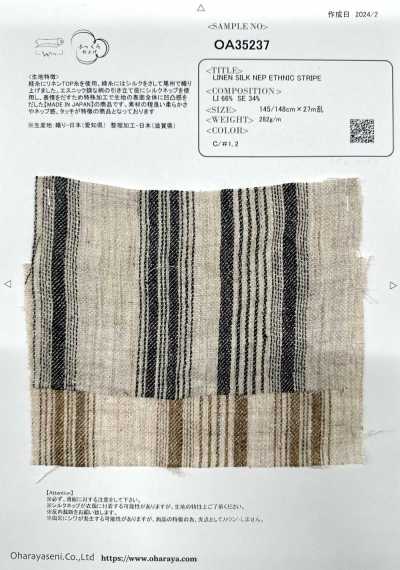
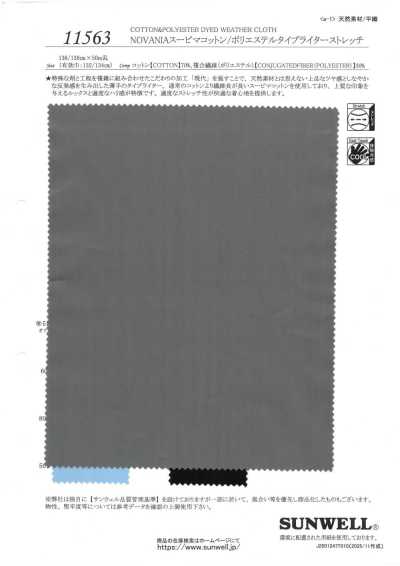
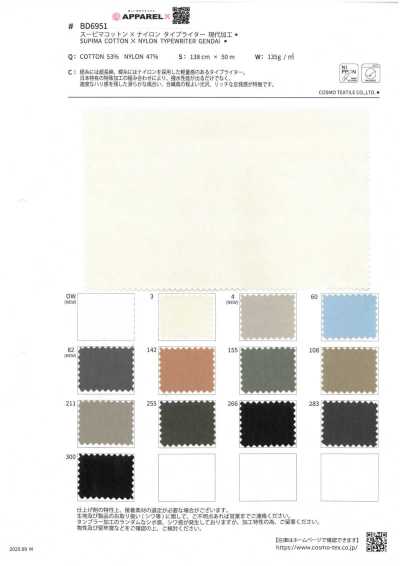
Pima Cotton
Pima cotton is a general term for cotton made from cotton fiber classified as extra-long staple cotton with long fibers, and is used for its smooth feel, elegant luster, and relatively even surface appearance.
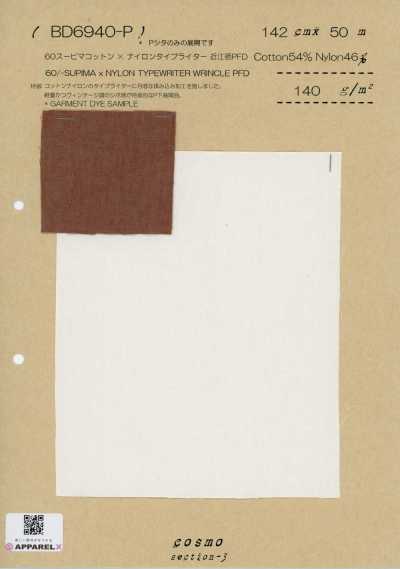
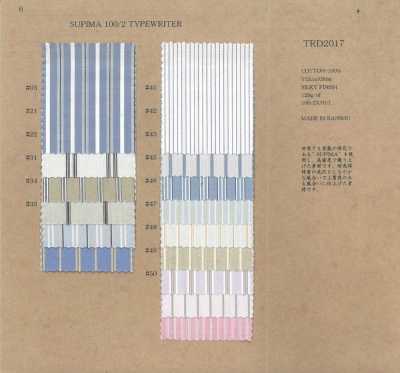
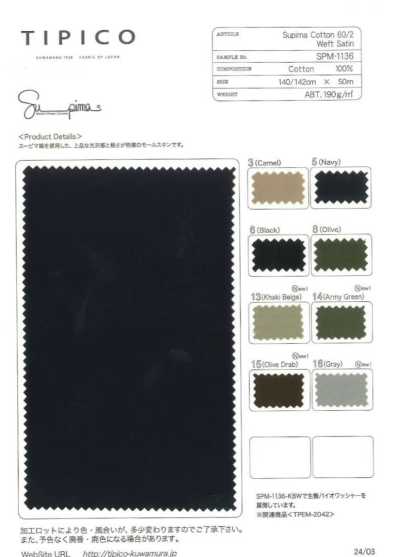
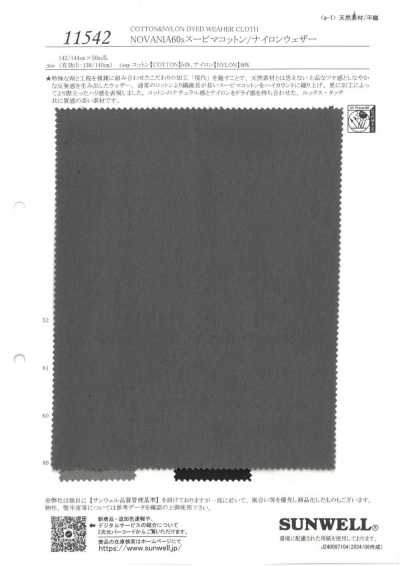
Contents6 sections
Definition and Overview
Pima cotton is a cotton material treated as a type of extra-long staple cotton with longer fibers than ordinary cotton. Because the fibers are long, it tends to produce less fuzz during spinning and is easier to spin into fine yarn. However, Pima cotton is not a name for a weaving or knitting method.
The texture of the textile is not determined by Pima cotton alone. The softness, firmness, luster, and thickness vary greatly depending on the quality of the raw cotton, yarn count and twist, knit or weave structure, density, and dyeing and finishing processes. It is important to check not only the material name but also the fabric sample and specifications.
Features
Yarn that takes advantage of long fibers tends to suppress surface fuzz and create a smooth, even appearance. In fine-count, high-density woven fabrics and high-gauge knits, a clean surface and subtle luster may be expressed.
While it has the absorbency and gentle feel of cotton, functions such as quick-drying absorbency, cool to the touch, and antibacterial deodorizing are not properties that Pima cotton itself necessarily has. These should be judged together with blended materials, knit or weave design, and post-processing.
Main Applications
Its fine, smooth yarn is used for cut-and-sew items such as jersey, underwear, T-shirts, polo shirts, shirts and blouses, and pajamas. It is suitable for items that call for a soft wearing feel and a clean surface.
In light to medium-weight textiles, it is often used for spring and summer clothing, but it can also be developed for fall and winter by changing the structure and fabric weight, such as French terry or brushed fabrics. Seasonality is judged by the textile thickness, structure, and finish, not by the type of Pima cotton.
- Elegant cut-and-sew items made with high-gauge jersey
- Shirts and blouses made with high-density plain weave
- Innerwear and nightwear made with soft knits
- Children's clothing that emphasizes a gentle feel against the skin
How to Choose and Handling Precautions
When selecting, in addition to the blending ratio of Pima cotton, check the yarn count, whether it is single yarn or ply yarn, fabric weight, knit or weave structure, and finishing process. If you value luster and smoothness, check the surface texture; if you value resistance to distortion, also check stitch density, density, blended materials, and dimensional stability.
Cotton products may shrink or change texture after washing. Before mass production, conduct washing tests at both the textile stage and the product stage to confirm shrinkage rate, skew, and color fading. Relaxing the fabric before cutting and, if necessary, scouring in hot water also help control dimensional change.
In sewing, if the textile is thin and high-density, needle holes may stand out and puckering may occur. Choose a machine needle and sewing thread fine enough for the textile, and adjust thread tension, feed, and stitch density after test sewing in advance.
Differences from Similar Terms
Extra-long staple cotton is a classification of cotton based on fiber length, and Pima cotton is used as a representative material name for it. Meanwhile, Suvin cotton, Sea Island cotton, and Giza cotton are also known as extra-long staple cotton, but their regions of origin, varieties, and market names differ.
Supima cotton is not a general term for Pima cotton as a whole; it is a name used for U.S.-produced Pima cotton that meets certain conditions. In planning documents, care tags, and sales copy, confirm whether raw material certification or licensing is required, and do not casually replace it with Pima cotton as if they meant the same thing.
Frequently Asked Questions
Are Pima cotton and extra-long staple cotton the same?
Pima cotton is generally classified as extra-long staple cotton, but extra-long staple cotton is a broader classification for all cotton with long fibers. There are several types of extra-long staple cotton besides Pima cotton. When comparing textiles, check not only the material name but also yarn specifications, structure, density, and processing.
Does Pima cotton textile shrink when washed?
Since Pima cotton is still cotton, it may shrink due to washing or drying. The degree of shrinkage varies depending on the knit or weave structure, processing, textile density, and washing conditions. When making a product, it is necessary to confirm the shrinkage rate of both the textile and the finished product in advance under the intended washing conditions.
Is Pima cotton difficult to sew?
Pima cotton itself does not determine sewing difficulty. However, fine-count, thin, high-density textiles may show needle holes or puckering more clearly. Test the needle size, thread count, thread tension, and stitch density on a fabric sample to determine the proper sewing conditions.