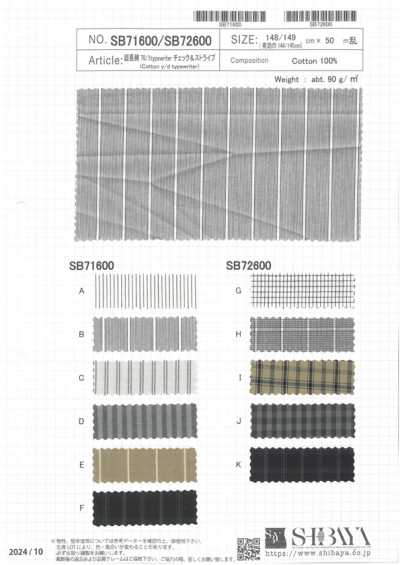
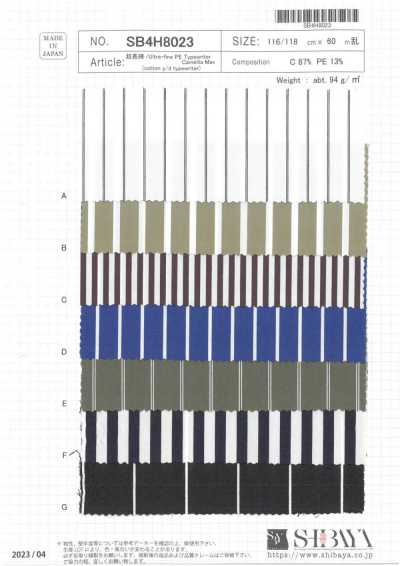
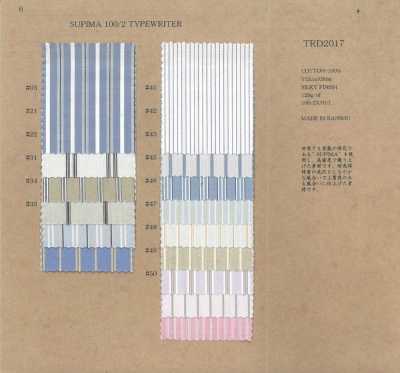
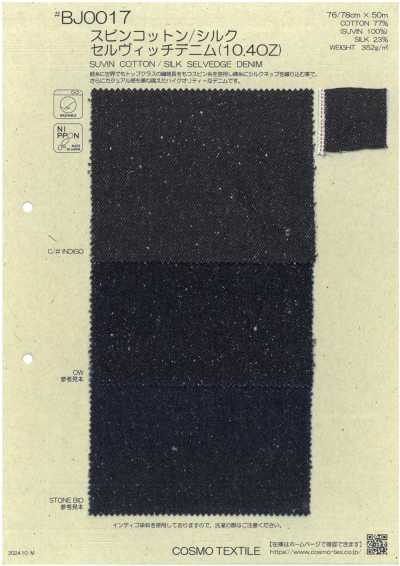
Extra-long Staple Cotton
Extra-long staple cotton is a cotton fiber obtained from cotton bolls with particularly long fiber length, and it is a material that is easy to spin into fine, even yarn and can readily produce a smooth texture and an elegant luster.
Contents6 sections
Definition and Overview
Extra-long staple cotton refers to cotton classified by fiber length, specifically cotton with especially long fibers. Because long fibers tend to interlock easily during spinning, it is characterized by its ability to produce fine, even yarn with less fuzz.
Extra-long staple cotton is the name of a fiber raw material, not a weave structure or fabric name. Even with the same extra-long staple cotton, thickness, firmness, luster, and wearing comfort vary greatly depending on yarn count, twist, weave or knit structure, density, and dyeing or finishing processes.
Texture and Appearance Characteristics
In general, fabrics made with extra-long staple cotton have a relatively smooth surface and appear to have less fuzz. In high-density woven fabrics that take advantage of yarn uniformity, they tend to produce an elegant luster that softly reflects light and a clear color expression.
Because it is easy to spin into fine-count yarn, it is a material that makes it easy to express delicacy and smoothness even in lightweight fabrics. On the other hand, being extra-long staple cotton alone does not determine softness, strength, absorbency, or the degree of luster. It is necessary to check the fabric specifications together with the finishing process.
Main Applications and Suitable Seasons
With its low-fuzz surface and comfortable feel against the skin, it is used for shirts, blouses, cut-and-sew items, underwear, pajamas, and more. It is also suitable for knits, handkerchiefs, and bedding fabrics that take advantage of its supple yarn.
Lightweight fabrics made with fine-count yarn are easy to use for spring and summer clothing, while high-density broadcloth and heavier knits are also used year-round. Applications are determined not only by the base material label of extra-long staple cotton, but also by fabric weight, structure, density, and finishing.
How to Choose and Handling Precautions
When selecting, check not only the extra-long staple cotton blend ratio but also the blend ratio, yarn count, single or plied yarn, fabric weight, density, and stretchability. For shirt fabrics, it is also reassuring to verify sheerness and seam puckering through samples, and for cut-and-sew items, stretch and shape retention should also be checked.
Cotton materials may shrink or wrinkle after washing. In particular, for unshrunk fabrics or products, consider hot-water pre-shrinking before cutting, or checking the shrinkage rate before and after sewing. For dark-colored items, follow the care instructions and wash separately from other items to avoid color transfer in the early stages of washing.
Fine, high-density fabrics may show needle holes or sewing shrinkage more noticeably. Choose a fine sewing machine needle and thread suitable for the fabric, and check seam stretch and thread tension in advance. For ironing, follow the care instructions first, and be careful of shine and fading caused by strong pressing.
Differences from Similar Terms
Cotton refers to the overall plant-derived fiber, while extra-long staple cotton is a classification based on fiber length. Organic cotton, on the other hand, is a term related to cultivation methods, so it is evaluated differently from extra-long staple cotton, which indicates fiber length.
Combed yarn is yarn that has undergone a combing process to remove short fibers and impurities. Extra-long staple cotton may be made into combed yarn, but the raw fiber length and the spinning process are separate pieces of information. Mercerization is also a process related to the luster and dimensional stability of cotton, and does not mean extra-long staple cotton itself.
Frequently Asked Questions
Is extra-long staple cotton always higher quality than regular cotton?
Extra-long staple cotton is a raw material that makes it easier to express smoothness and less fuzz by taking advantage of its long fibers. However, quality is not determined uniformly by the raw material alone. It is important to evaluate it together with the spinning method, yarn twist, fabric structure, density, processing, and suitability for the intended use.
Does fabric made with extra-long staple cotton shrink when washed?
Even fabrics containing extra-long staple cotton may shrink due to washing and drying. The degree of shrinkage varies depending on the structure, density, finishing process, and washing conditions. Before mass production, check the fabric shrinkage data and, if necessary, perform hot-water pre-shrinking or dimensional correction.
Are extra-long staple cotton and organic cotton the same?
No, they are not the same. Extra-long staple cotton is mainly a raw material classification based on fiber length, while organic cotton is a term related to cultivation and management methods. A material may meet both conditions, but the basis for labeling and whether certification exists must be checked separately.