Taslan
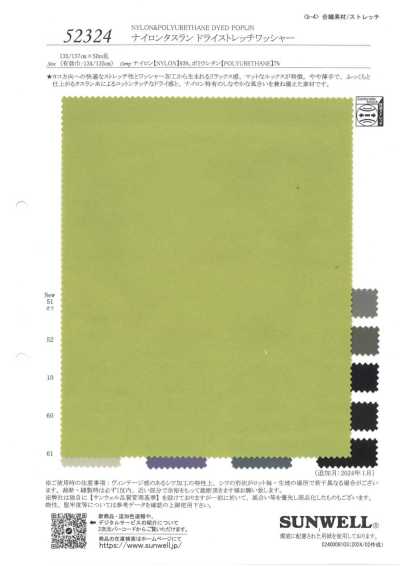
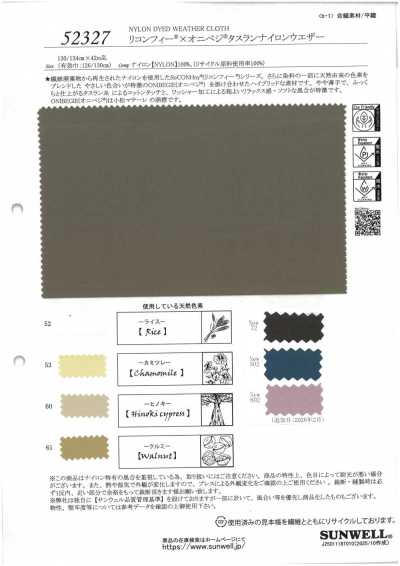
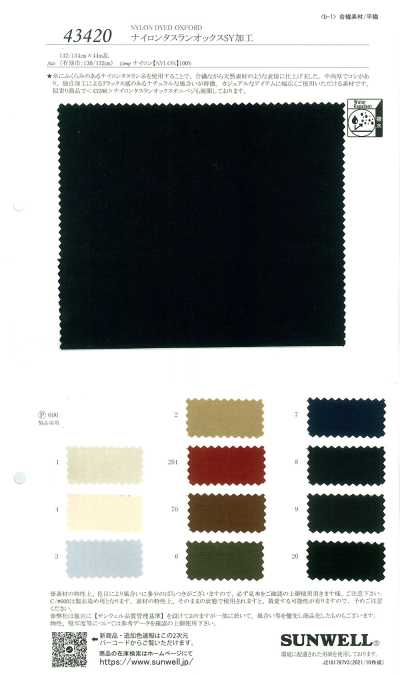
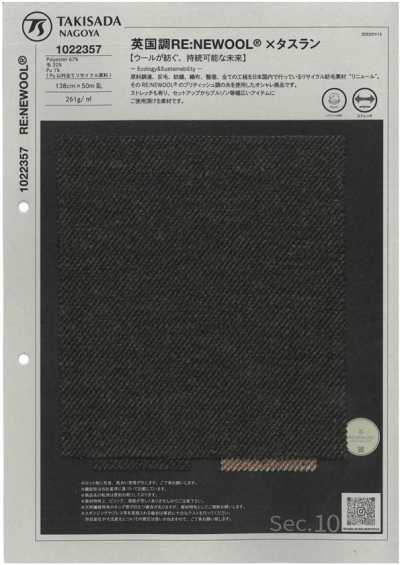
Taslan refers to a process that uses air to create loops and bulk in filament yarn, or to woven fabric made with such processed yarn. It is a material, mainly made from nylon, that combines lightness with a natural spun-yarn-like appearance.
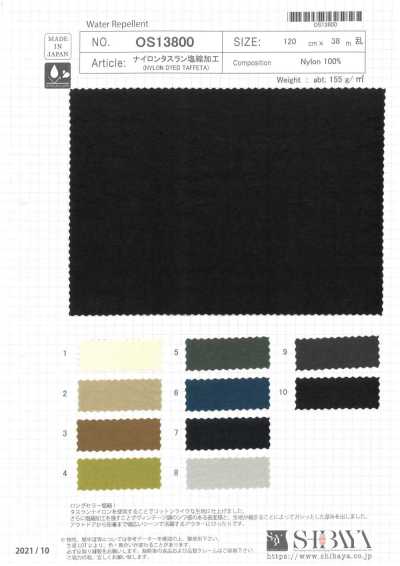
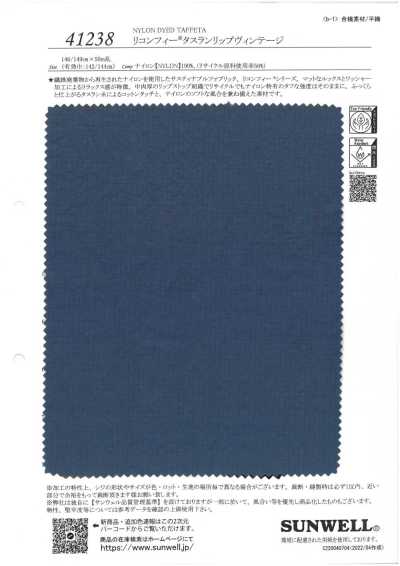
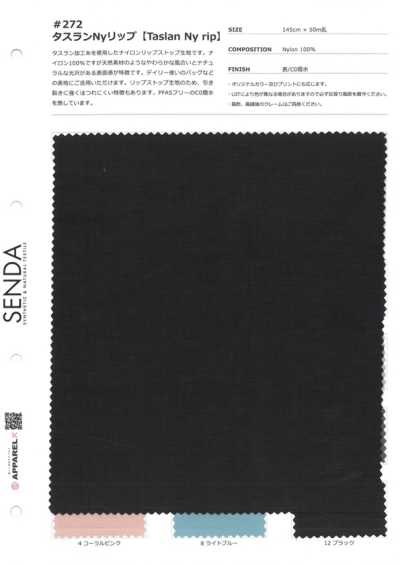
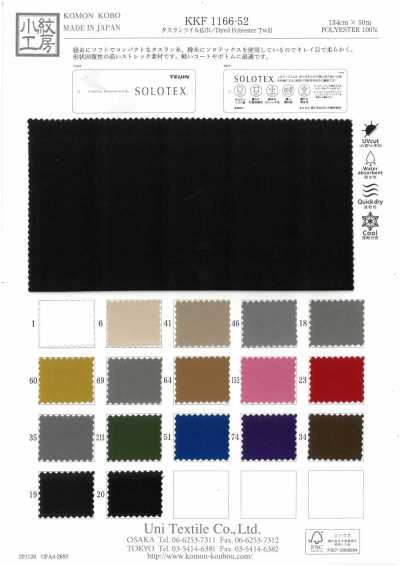
Contents6 sections
Definition and Overview
Taslan refers to air-taslan processing, in which compressed air is blown onto filament yarns, mainly synthetic fibers, to entangle the yarns and create loops and loft. It is also used as the name for the processed yarn, or for textiles made with that yarn.
Its defining feature is that filament yarns, which are continuous long fibers, can be given a look and feel similar to spun yarn made from short fibers. In the market, nylon taslan is common, but the material, weave structure, and finishing process vary by product number.
Texture and Function
The surface has fine irregularities and loft, making it a material that easily achieves a smooth, dry touch, moderate firmness, and a matte appearance similar to natural fibers. On the other hand, softness, thickness, and drape vary greatly depending on yarn thickness, amount of processing, and weaving density.
When nylon is used, it can take advantage of light weight and abrasion resistance, making it suitable for outerwear applications. However, being taslan does not in itself guarantee water repellency, waterproofness, moisture permeability, or stretch. Required performance should be confirmed through post-processing and textile specifications.
Main Applications
Taslan textiles are used for light clothing and outerwear such as blousons, windbreakers, mountain parkas, and coats. They balance a casual look with lightness, and are also used for spring and summer layering pieces, as well as lightweight outerwear for early autumn.
Depending on fabric weight, density, back-side processing, and whether lamination is applied, they are also used for pants, skirts, bags, uniforms, and outdoor items. For thin fabrics, sheerness and seam strength must also be checked.
How to Choose and Handling Notes
When selecting, check not only the composition but also fabric weight, density, thickness, breathability, and whether water-repellent finishing is applied. For outdoor use, also confirm water resistance and moisture permeability as needed. In prototyping, it is important to evaluate dimensional change after washing, wrinkle behavior, and color appearance with the actual material.
Because it is mainly made of synthetic fibers, it tends not to shrink much, but dimensions and appearance may change depending on heat, finishing, and processing conditions. Follow the care label for washing and ironing, and be careful of shine and fading caused by high-temperature drying or direct pressing.
In sewing, thin fabrics and high-density items may show needle holes. Choose a fine needle and thread suitable for the textile, and test thread tension, presser foot pressure, and feeding conditions in advance to prevent seam puckering and seam shrinkage.
Differences from Similar Terms
Taslan is not the name of a weave structure; it is mainly a term for a processing method that adds texture to yarn, or for the processed yarn itself. Plain weave and twill are weave structures that indicate how warp and weft yarns intersect, and taslan yarn can be woven using those structures.
Taffeta is the name for a thin, high-density woven fabric, and some types have a relatively smooth, lustrous appearance. In contrast, taslan emphasizes loft from air processing and a natural-fiber-like surface. However, the actual appearance depends on the material and design.
FAQ
Does taslan refer only to nylon?
Nylon taslan is widely available, but taslan originally refers to the idea of giving filament yarns loft and loops through air processing. Therefore, do not determine the fiber type from the name alone; check the composition label and specification sheet for materials such as nylon or polyester.
Is taslan textile water-repellent?
Water repellency cannot be determined from the name taslan alone. Water repellency is mainly imparted through surface finishing and fabric density, so for applications that require it, confirm the water-repellency rating, performance change after washing, and water resistance test values.
What should be noted when sewing taslan textile?
Thin or high-density taslan may show needle holes, seam puckering, and presser marks. Before full production, run trial stitching with the needles, thread, and seam specifications to be used, and adjust thread tension and presser foot pressure to suit the textile.