Wax-resist Dyeing
Wax-resist dyeing is a resist-dyeing technique in which part of the textile is covered with melted wax to prevent dye from penetrating, and patterns are created by repeating dyeing and wax application.
Contents6 sections
Definition and Overview
Wax-resist dyeing is a dyeing technique that uses a wax film as a resist agent. Wax is applied to the areas that should not be dyed, and after dyeing and then removing the wax, those areas remain undyed as a pattern. For multicolor patterns, waxing and dyeing are repeated for each color.
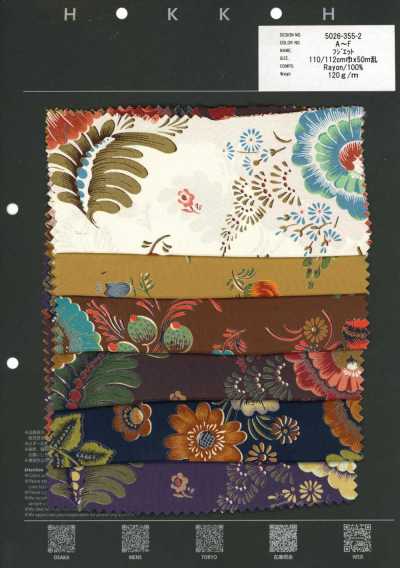
Batik is a term widely used to refer to wax-resist dyeing. However, in sales settings, even textile with prints that recreate a wax-resist style pattern may be called batik, so it is important to confirm whether the term refers to the technique itself or to the pattern name.
Features
When dye enters areas where the wax has cracked, fine line-like patterns appear. This effect is called crackle, and it creates the irregular, handmade look typical of wax-resist dyeing. Because of the waviness of the waxing and the layering of the dye, this technique tends to produce differences from piece to piece.
The texture, thickness, breathability, and stretch depend not on the wax-resist dyeing itself but on the fiber, weave or knit structure, and dyeing conditions of the base textile. It is used on a wide range of materials such as cotton and silk, but even with the same pattern, wearing comfort and sewing suitability change if the base textile changes.
Main Applications
Taking advantage of its strong visual presence, it is used for shirts, blouses, dresses, skirts, pants, and outer layers. On lightweight textiles it is used for spring and summer garments, while on firmer base textiles it can also be used for bags and interior accessories.
For large patterns or directional patterns, the appearance of the product changes greatly depending on the cutting position. If you decide in the planning stage whether to match the pattern on the left and right bodices, front and back bodices, pockets, and so on, or to intentionally make it look irregular, it becomes easier to control the finished result.
- Even when no pattern placement is specified for an allover pattern, the appearance will differ depending on each cut.
- Fabric consumption should be estimated while considering whether pattern matching is required and the size of the pattern.
Selection and Handling Notes
When selecting, distinguish between true wax-resist dyeing and wax-resist style printing, and check the base textile material, fabric weight, color, pattern size, and variations within the lot. Checking the direction of the pattern, color depth, and crackle effect on actual rolls or swatches can help reduce misunderstandings at the time of mass production.
The degree of shrinkage and color fading from washing varies depending on the material, dye, and post-processing. Before sewing, confirm dimensional change by boiling treatment or similar methods if necessary, and set handling instructions that follow the test results and care label, such as advising separate washing for dark colors.
Before cutting, check the grain line and pattern direction, and test the use of tailor's chalk and an iron on a less visible area. Depending on wax residue, the surface condition, and the thinness of the base textile, needle holes, seam puckering, and seam slippage may stand out, so adjust the needle, thread, and sewing conditions through test stitching.
Differences from Similar Terms
Printing is a method of adding a pattern to the surface of textile using screens, inks, or similar means. Wax-resist dyeing is a resist-dye technique that prevents dye penetration with wax, and it is characterized by layered colors from dyeing and crackle. However, there are also textiles that reproduce the design of wax-resist dyeing through printing.
Shibori dyeing is a resist-dye technique that creates areas where dye does not easily enter by tying, sewing, folding, or otherwise manipulating the cloth. While wax-resist dyeing uses wax, shibori dyeing is basically based on resisting dye through binding or folding the cloth. Both methods tend to produce unique, individual expressions in each piece.
Frequently Asked Questions
Are batik and wax-resist dyeing the same?
Batik is generally a word for wax-resist dyeing. However, in distribution, patterns that resemble wax-resist dyeing and printed textiles may also be called batik. When purchasing or deciding specifications, confirm whether the item is dyed using wax or expressed through printing.
Does wax-resist dyed textile shrink when washed?
Whether shrinkage occurs and how much it occurs cannot be determined by the wax-resist dyeing technique alone. It depends on the fiber of the base textile, the woven or knitted structure, scouring and finishing, and washing conditions. Carry out washing tests before mass production, and consider boiling treatment before cutting or washing instructions as needed.
What should be noted when sewing wax-resist dyed textile?
Check the pattern direction and cutting position in advance, and decide how to match patterns on the left and right sides or on pockets. Also, choose the needle, thread, and sewing conditions suitable for the material and thickness of the base textile through test stitching. On dark colors, needle holes and fading may stand out, so check on inconspicuous areas.