Covert Cloth
Covert Cloth is a woven fabric mainly made from worsted wool, with finely emphasized twill lines on the surface and a durable, crisp hand, used for coats and jackets.
Contents6 sections
Definition and Overview
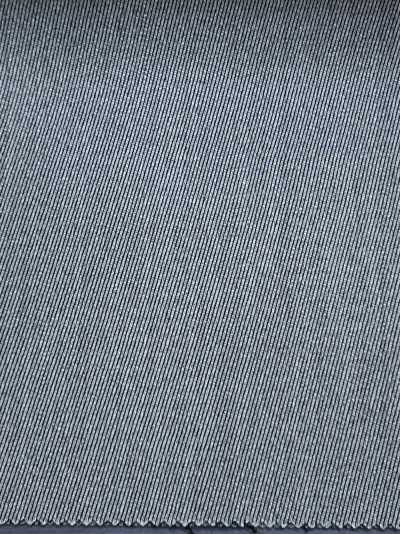
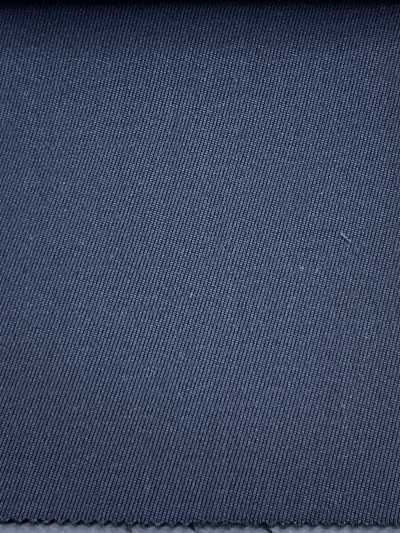
Covert cloth is a relatively dense textile that has traditionally been used as coat fabric for outdoor wear. It is generally made mainly from worsted wool and is characterized by fine diagonal twill lines that appear on the surface at a steep angle.
The name is used not only for the weave structure of the fabric, but also as a term that includes its intended use and appearance. Because the look and thickness vary depending on the raw material, thread thickness, density, and finishing, specifications should be checked rather than judging performance from the name alone.
Features
The surface shows distinct diagonal ridges and gives a neat, firm impression. Unlike coat fabrics with a strong brushed feel, it is a material with relatively little surface fuzz and a tidy appearance that tends to produce clear outlines.
Depending on density and thread use, it generally offers expected abrasion resistance and warmth retention. On the other hand, water resistance and water repellency are not guaranteed by the name covert cloth alone, so rain protection must be checked through post-processing and product specifications.
- It has body and is easy to tailor well.
- Because the twill lines have direction, care is needed with the grain line during cutting and the way pieces appear relative to one another.
- For wool-based fabrics, wrinkles tend to recover easily, but they are affected by humidity and friction.
Main Applications
It is used for items where a structured silhouette is desired, such as coats, half-coats, jackets, suits, and pants. Depending on thickness and fabric weight, it is also used for work-style outerwear and uniforms.
It is mainly used for autumn and winter because it makes it easy to take advantage of warmth retention, but if it is designed to be thin and lightweight, it can also be used for jackets and bottoms for the transitional season. Whether or not there is lining, and the combination with interfacing, affect ease of movement, warmth retention, and tailoring stability when worn.
Selection and Handling Notes
When selecting, check the composition, fabric weight, fabric width, thickness, stretch, and finish, and if necessary, make a sample before sewing. For coat use, evaluate wind resistance and warmth retention; for pants use, evaluate abrasion in bending areas and wear comfort according to the intended application.
Wool-based fabrics may shrink or change texture when washed with water. Follow the care label on the fabric or product for washing and ironing, and before mass production it is important to conduct washing tests and pressing tests assuming the state after sewing.
Before cutting, let the roll rest sufficiently and straighten the grain line. On thick fabrics, areas where seam allowances overlap tend to become bulky, so test the way the seam allowances are opened, the firmness of the interfacing, and the needle, thread, and feed settings to reduce fading and puckering.
Differences from Similar Terms
Gabardine is a high-density, steep-angle twill weave with a smooth surface and fine ribs. Covert cloth also has a twill weave, but it is generally treated as a thicker fabric with a more substantial appearance for coats.
Twill is a broad term for twill-woven fabrics in general. In contrast, covert cloth is not limited to a single type of twill weave structure, but is a fabric name with its own ribbed texture, density, and intended use. Chino cloth is a durable twill mainly made from cotton, and its raw material and texture differ.
Frequently Asked Questions
Are covert cloth and gabardine the same?
No, they do not mean the same thing. Both are textiles characterized by twill lines, but while gabardine is treated as a high-density, steep-angle twill, covert cloth is generally a fabric name for coat use with substantial thickness and clear ribbing. The actual difference also varies depending on the raw material and finishing.
Can covert cloth be washed at home?
It depends on the composition and finishing. Wool-based covert cloth may shrink, harden, or lose its shape when washed with water, so check the care label on the product. In planning and production, it is important to confirm dimensional changes after washing for each fabric used.
What should be noted when sewing covert cloth?
When the fabric has body and thickness, areas where seam allowances overlap can become bulky, and fading or puckering may occur. Test the seam allowance treatment, needle and thread selection, feed settings, and pressing conditions in advance, and cut while aligning the direction of the twill lines.