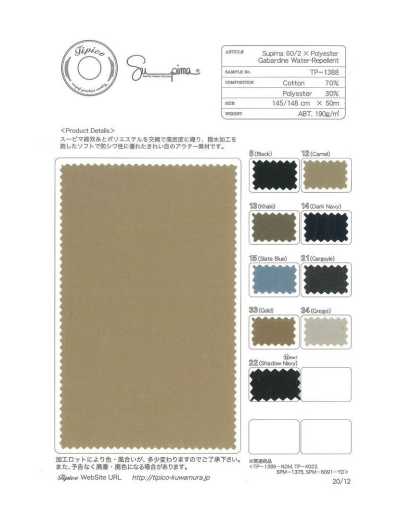
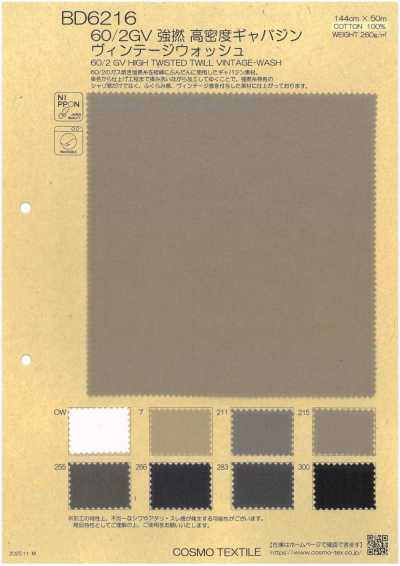
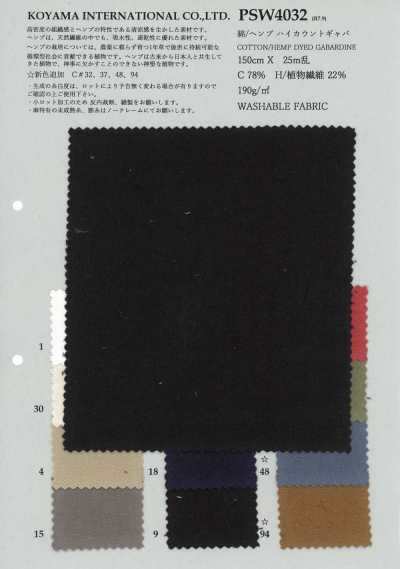
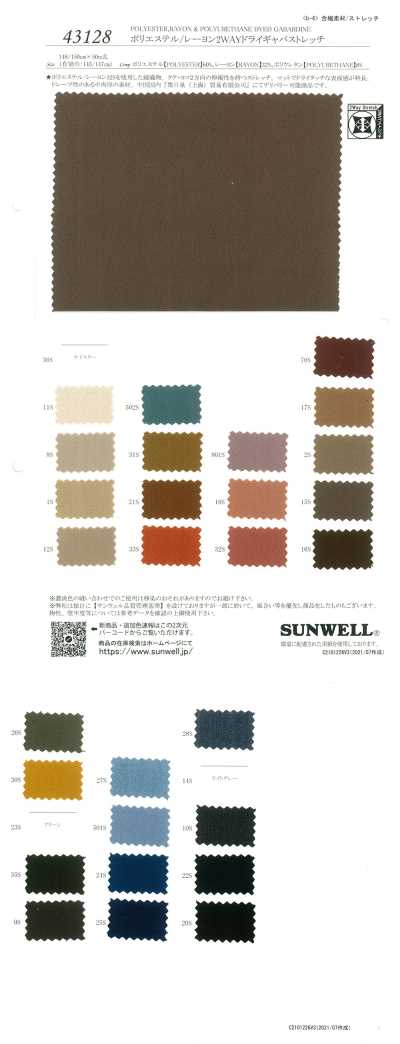
Gabardine
Gabardine is a high-density twill fabric with fine diagonal twill lines that appear clearly, and depending on the material and finish, it ranges from a firm texture to a soft, flowing drape.
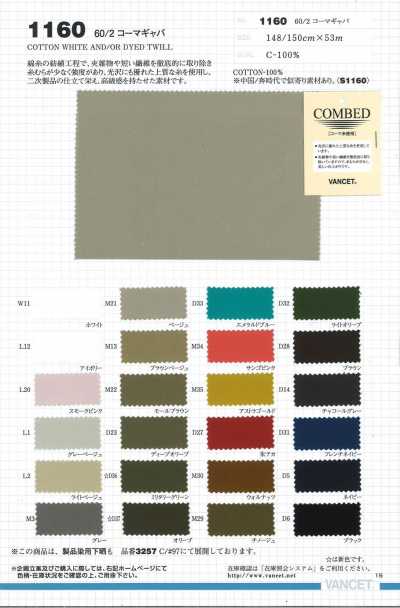
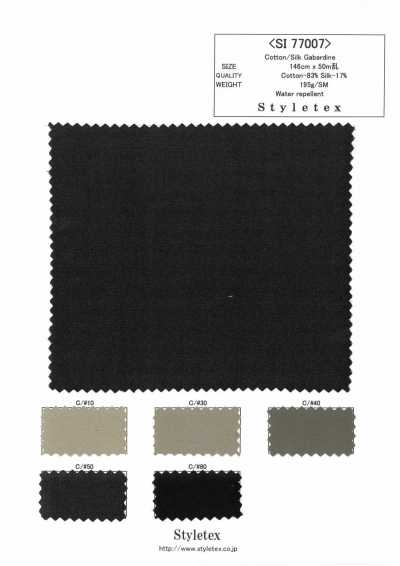
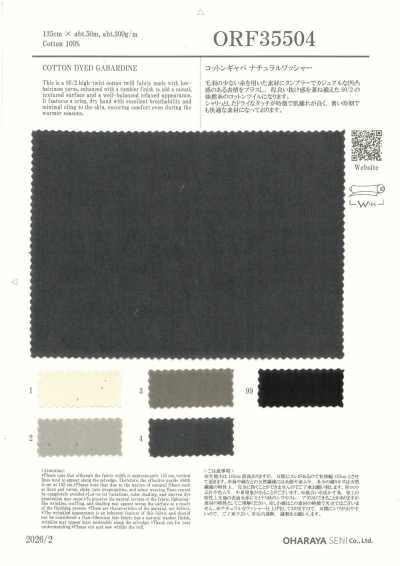
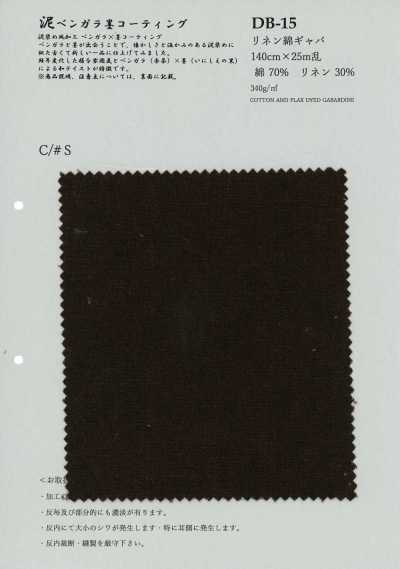
Contents6 sections
Definition and Overview
Gabardine is a twill fabric that is often woven with a high warp density. Its surface shows fine, continuous ribs at a steep angle, that is, twill lines. Wool suiting fabric is the classic example, but it is also made from cotton, polyester, rayon, and other materials.
It is not a material name, but a fabric name based on the weave structure, density, and appearance. For that reason, even within gabardine, thickness, firmness, luster, and drape can vary greatly depending on the raw material, yarn thickness, and finishing.
Characteristics
High-density versions have a relatively smooth surface with moderate crispness and body. The understated luster and dimensional effect created by the twill lines make it easy to give plain fabrics visual interest.
Because the weave is tight, it generally blocks wind well and is easy to make durable. However, water resistance and water repellency are not always included. Required performance should be checked individually, including any water-repellent finish.
Wool-based fabrics are easy to tailor beautifully and produce an elegant drape, while cotton-based fabrics have a more natural feel and casual look. Polyester-based fabrics are often used for applications that emphasize ease of handling, and blends can combine the characteristics of each fiber.
Main Applications
It is used for garments that should show a clean silhouette, such as jackets, slacks, skirts, dresses, and coats. Depending on density and fabric weight, it is also suitable for shirts, blousons, uniforms, and bottoms.
Medium-weight to heavyweight items are used for autumn and winter suiting fabrics and outerwear, while relatively lightweight items with good drape are used for spring and summer jackets and bottoms. It is important to check the material, thickness, and sheerness rather than judging only by the season name.
- Jackets and suits
- Pants and skirts
- Coats and blousons
- Uniforms and workwear
Selection and Handling Notes
When selecting, check the visibility of the twill lines, fabric weight, density, blend ratio, stretch, and finishing according to the intended use. For tailored applications, confirm crispness and recovery, and for items that make use of drape, check softness and drape with a fabric swatch before sewing.
Because twill lines have a direction, aligning the grainline and the direction of the twill lines for each garment piece during cutting helps reduce differences in the appearance of color and sheen. Even fabrics without a pile may show differences in cutting direction due to the reflection of light.
Washing methods vary depending on the material and finishing. Items containing cotton or rayon may shrink or change texture after washing, and items containing wool may change in dimensions or appearance when washed in water. Before mass production, carry out wash tests and check the shrinkage rate.
Differences from Similar Terms
Twill is the English term for the twill weave and refers to twill fabrics in general. Gabardine is treated as a type of twill, and the difference is that it often features a high-density weave with fine, steep twill lines. However, the scope of the term varies depending on the fabric industry and the seller.
Chino cloth is also often a fabric that uses a twill weave, but it generally has cotton as the main fiber and is strongly associated with casual pants fabric. Gabardine has a broader range of raw materials and is also used for fabrics with a neat, tailored appearance.
Frequently Asked Questions
Is gabardine a waterproof fabric?
Gabardine is often woven at high density, so water droplets may not soak in easily, but that does not make it a waterproof fabric. For rainwear, check whether it has a water-repellent finish, whether a waterproof breathable film is used, and the seam specifications.
What is the difference between gabardine and twill?
Twill is the general term for the twill weave. Gabardine is a term often used for a fabric within that category that is characterized by fine, steep twill lines and high density. However, actual usage varies by region of production and trading partner.
What should I watch out for when cutting gabardine?
It is important to keep the direction of the twill lines and the grainline consistent across all parts. If directions are mixed, the fabric may appear to have color differences depending on the lighting or viewing angle. Before cutting, clearly identify the face and back of the fabric and one consistent direction, and manage it so that the direction is aligned when spreading the fabric as well.
- Browse Gabardine products
- Products with material "Cotton"
- Products with material "Polyester"
- Products with material "Wool"
- Products for style "For Outerwear/blousons/coats"
- Products for style "For Pants"
- Products for style "For Jackets/Suits"
- Products for style "For Uniforms/Workwear"
- Browse Textile products