Fancy Yarn
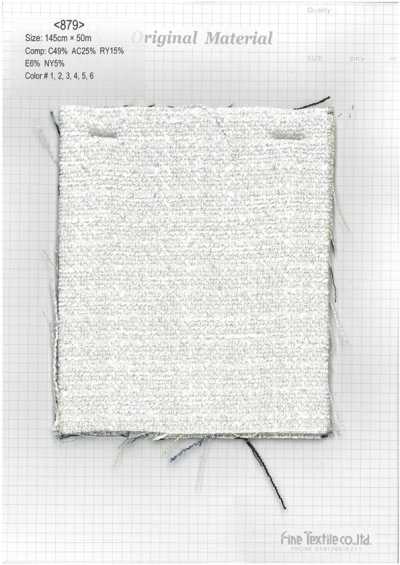
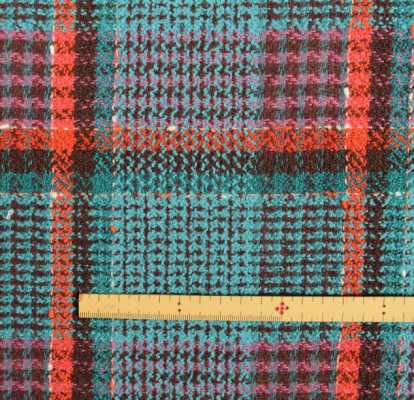
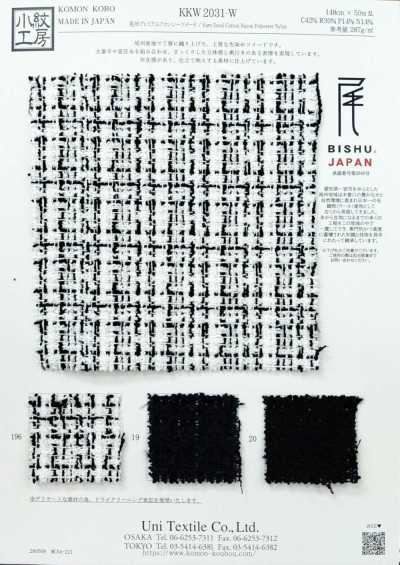
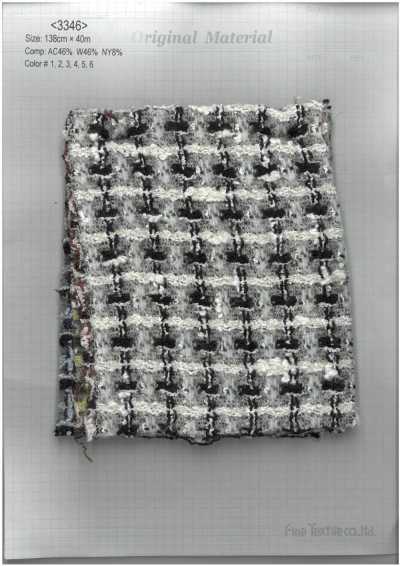
Fancy yarn is a general term for threads that are intentionally altered in thickness, twist, fuzz, slubs, loops, luster, and other features to give knitted fabrics and woven fabrics a decorative appearance and distinctive texture.
Contents6 sections
Definition and Overview
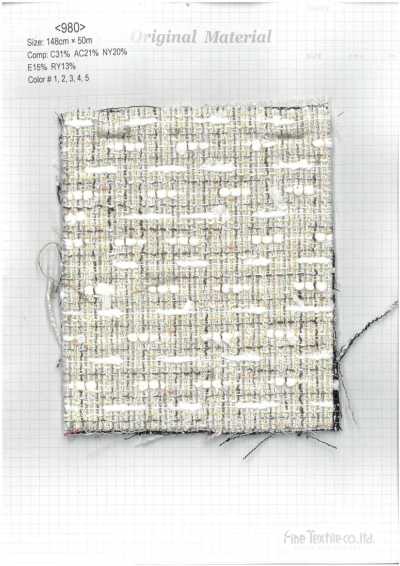
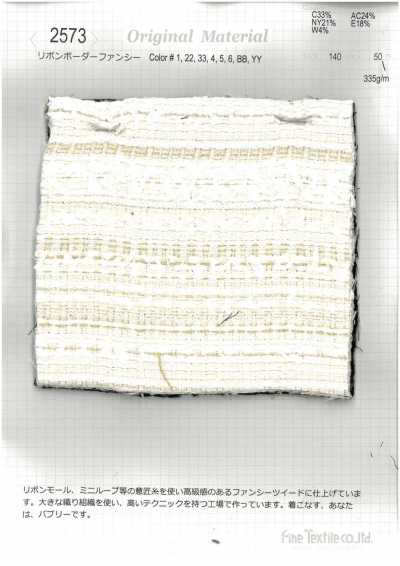
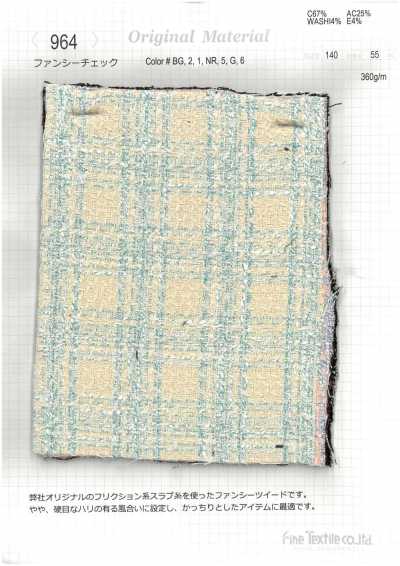
Patterned yarn is a yarn that has decorative variations built into the yarn itself, compared with ordinary yarn that has a uniform thickness and surface. It can add texture, shadow, and a material feel to textile that are difficult to achieve through weaving or knitting alone, or by dyeing.
Patterned yarn is not a material name or weave name, but a classification based on the yarn's appearance and structure. It is made from a wide range of fibers such as cotton, wool, and polyester, and is used in both woven fabrics and knits.
- Nep yarn with nodular bulges
- Bouclé yarn with a looped surface
- Chenille yarn with fuzz or fiber bundles
- Lame yarn that adds a metallic sheen
Characteristics and Visual Effects
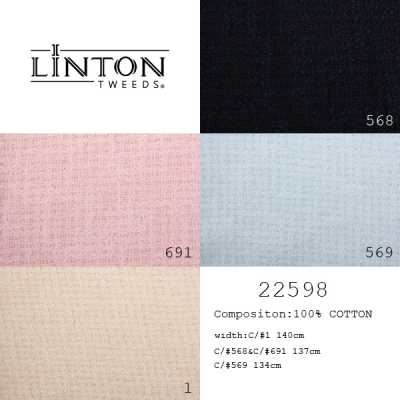
Because of differences in thickness, loops, fuzz, neps, and similar features, textile made with patterned yarn often has a irregular, rich surface texture. The shadows change depending on how the light hits it, allowing even solid items to look patterned and to express the warmth of a handmade feel.
On the other hand, depending on the yarn structure and blended fibers, patterned yarn can vary greatly in strength, elasticity, bulk, and resistance to friction. It is important to check not only the visual features, but also the composition, yarn usage, and weaving or knitting density.
Main Applications and Seasonality
It is used for tweed-like jackets and coats, knitwear, skirts, dresses, and scarves. Taking advantage of its surface texture, it is also used for decorative dresses, stage costumes, bags, and woven or knitted goods for interior use.
Patterned yarns with wool blends or a brushed feel are often seen in autumn and winter materials, but slub yarns with a cotton or linen feel, and filament-based patterned yarns with sheen, are also used for light clothing for spring and summer. The season depends more on the thickness and composition of the textile than on the yarn type.
How to Choose and Handling Precautions
When selecting, check the finished textile for surface three-dimensionality, sheerness, weight, and drape. Because there may be individual differences or lot differences in how neps and loops appear, it is reassuring to agree on the acceptable range of appearance with a sample roll before mass production.
Shrinkage from washing, fuzzing, pilling, and loops catching on things can occur depending on the material and yarn structure. While following the care label instructions, carry out washing and friction tests before productization, and consider lining or reinforcement specifications as needed.
During sewing, the uneven surface may make the seam line unstable, or the thread may catch on the needle or presser foot. Confirm through prototyping issues such as fraying at the fabric edge, thread being pulled into the seam, and how the patterned surface looks like a pattern.
Differences from Similar Terms
Slub yarn, neps, bouclé, chenille yarn, and lame yarn are all representative yarn types that can fall under patterned yarn. Patterned yarn is the broad term that groups these together, while each specific name indicates differences in surface effect or manufacturing method.
Melange yarn is a yarn that expresses a heathered effect by blending fibers or yarns of different colors, and mainly refers to color effects. Patterned yarn differs in that it also covers three-dimensional features such as thickness, shape, and fuzz, not just color.
Frequently Asked Questions
Do patterned yarn and fancy yarn mean the same thing?
In many cases, patterned yarn and fancy yarn are used with the same meaning. Both are general terms for yarn with decorative variations such as differences in thickness, neps, loops, fuzz, and sheen. However, because some suppliers may use the terms to refer to specific yarn types, specification confirmation is necessary.
Does textile made with patterned yarn shrink when washed?
Whether it is prone to shrinking cannot be determined by the patterned yarn classification alone; it varies depending on the type of fiber, yarn twist, weave or knit structure, and finishing process. In particular, when natural fibers or bulky yarns are included, confirm dimensional change and surface change after washing in advance, and set the product care label appropriately.
What should I pay attention to when sewing textile made with patterned yarn?
In textile with loops, fuzz, or thick slubs, catching and seam distortion can occur. Adjust the needle, thread, and feeding conditions through trial stitching, and take care not to damage the surface during cutting. If it frays easily, also check edge specifications such as overlock finishing.