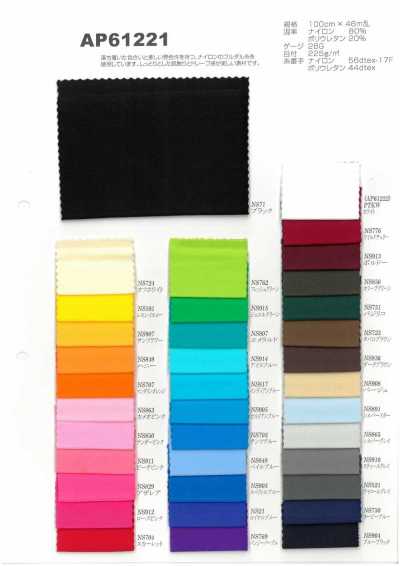
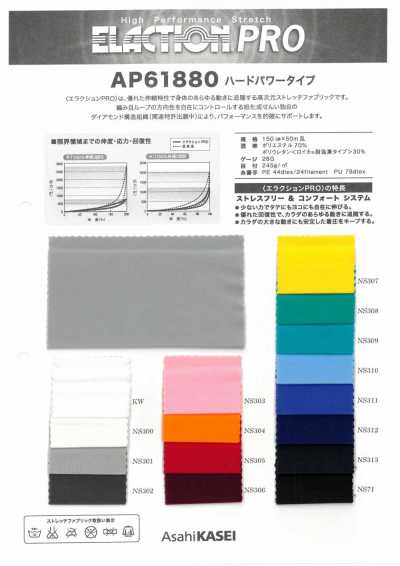
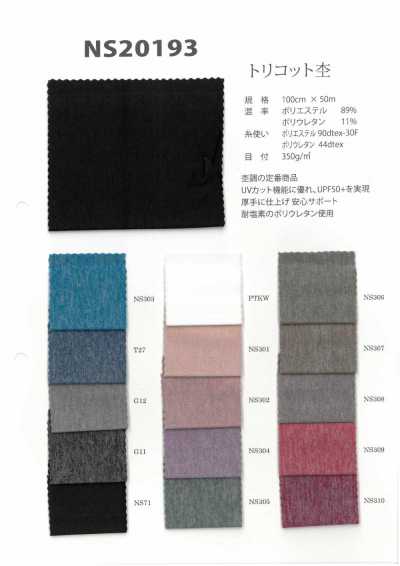
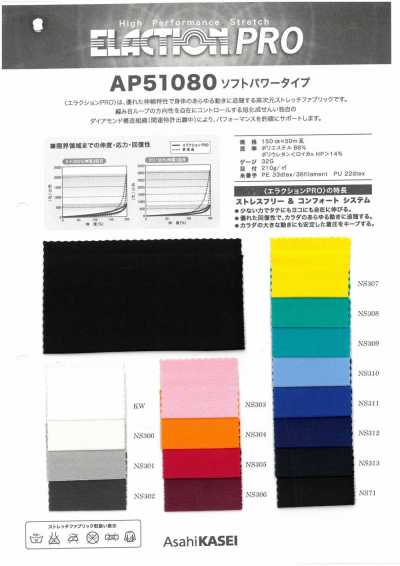
Dtex
Decitex is a unit that expresses the thickness of yarn or fibers as the number of grams per 10,000 meters, and the larger the value, the thicker the yarn it indicates for the same material and structure.
Contents6 sections
Definition and Overview
Decitex, written as dtex, is a unit that indicates the linear density of fiber and yarn. It expresses the mass of 10,000 meters of yarn in grams, and can be used to compare thickness as the weight per fixed length, regardless of whether the yarn is long or short.
It is mainly used in specifications for filament yarns and synthetic fibers, but it may also be shown for spun yarns. It is not a unit that indicates the thickness or weight of the textile itself, but rather a unit that indicates the specifications of the yarn that makes it up.
Features You Can Read from the Numbers
In general, when comparing the same fiber material, cross-sectional shape, and processing conditions, yarn with a higher dtex value is thicker and more likely to give a firm appearance and a stronger presence. Yarn with a lower value tends to express delicacy, lightness, and smoothness more easily.
However, texture, luster, sheerness, strength, and water absorbency cannot be determined from dtex alone. It is necessary to check the material, the difference between single yarn and multifilament, twist, number of yarns, weave or knit structure, density, and finishing processing together.
- Yarn equivalent to a thick count tends to give textile more thickness and firmness.
- Thin yarn may allow both lightness and a dense surface feel when woven or knitted at high density.
- Even with the same dtex, touch and luster vary depending on the number of filaments and the cross section.
Main Applications
Decitex is not a classification that indicates a specific item or season, but is used in a wide range of situations where yarn is selected, such as apparel, lining, sports and outdoor applications, and material applications. Thin yarn is considered for uses that require lightweight textile or a delicate surface feel, while thick yarn is considered for uses that require durability and volume.
Actual applications are not determined by yarn dtex alone, but are decided based on fabric weight, density, structure, and the required strength and stretch. Seasonal feel also varies greatly depending on the moisture absorption and release properties of the material, whether brushed or not, and the textile design.
Selection and Handling Notes
When planning, check the dtex of the warp and weft, or the face yarn and back yarn, in the specification sheet, and evaluate them together with fabric weight and width. When comparing yarn made from different materials, even with the same dtex, specific gravity and bulkiness differ, so it is important to check thickness, appearance, and strength with a trial textile.
Shrinkage and dimensional change after washing cannot be predicted from the size of dtex alone. They vary depending on material characteristics, whether heat setting has been applied, dyeing and finishing, and the structure, so testing in accordance with the care label and checking the shrinkage rate are necessary. In sewing, adjust the needle, thread, and sewing conditions according to the textile's thinness or thickness and stretchability.
Difference from Similar Terms
Denier is also a unit of linear density that indicates yarn thickness, but it is expressed as grams per 9,000 meters. Decitex, on the other hand, is grams per 10,000 meters. Since the reference length differs, be careful not to treat the numbers as directly equivalent.
Count is a thickness indicator mainly used for spun yarn. It differs from decitex in the way thickness is expressed, and in count, a larger number generally indicates a thinner yarn. The important point with decitex is that a larger number indicates a thicker yarn.
Frequently Asked Questions
If the dtex value is higher, does that always mean a thicker textile?
Not necessarily. Yarn with a higher dtex tends to be thicker, but textile thickness also depends on density, weave or knit structure, material, processing, and the number of yarns used. Make the judgment after checking fabric weight, thickness, and texture with a fabric sample.
How do you convert decitex and denier?
Decitex is grams per 10,000 meters, while denier is grams per 9,000 meters. Therefore, 1 denier is about 1.11 dtex, and 1 dtex is about 0.9 denier. In the specification sheet, check which unit is being used before comparing.
Can shrinkage after washing be determined from dtex alone?
No, it cannot be determined from dtex alone. Shrinkage is affected by the type of fiber, yarn processing, weave or knit structure, dyeing and finishing, and the condition after sewing. Before mass production, testing under the intended washing conditions and checking the shrinkage rate are necessary.